
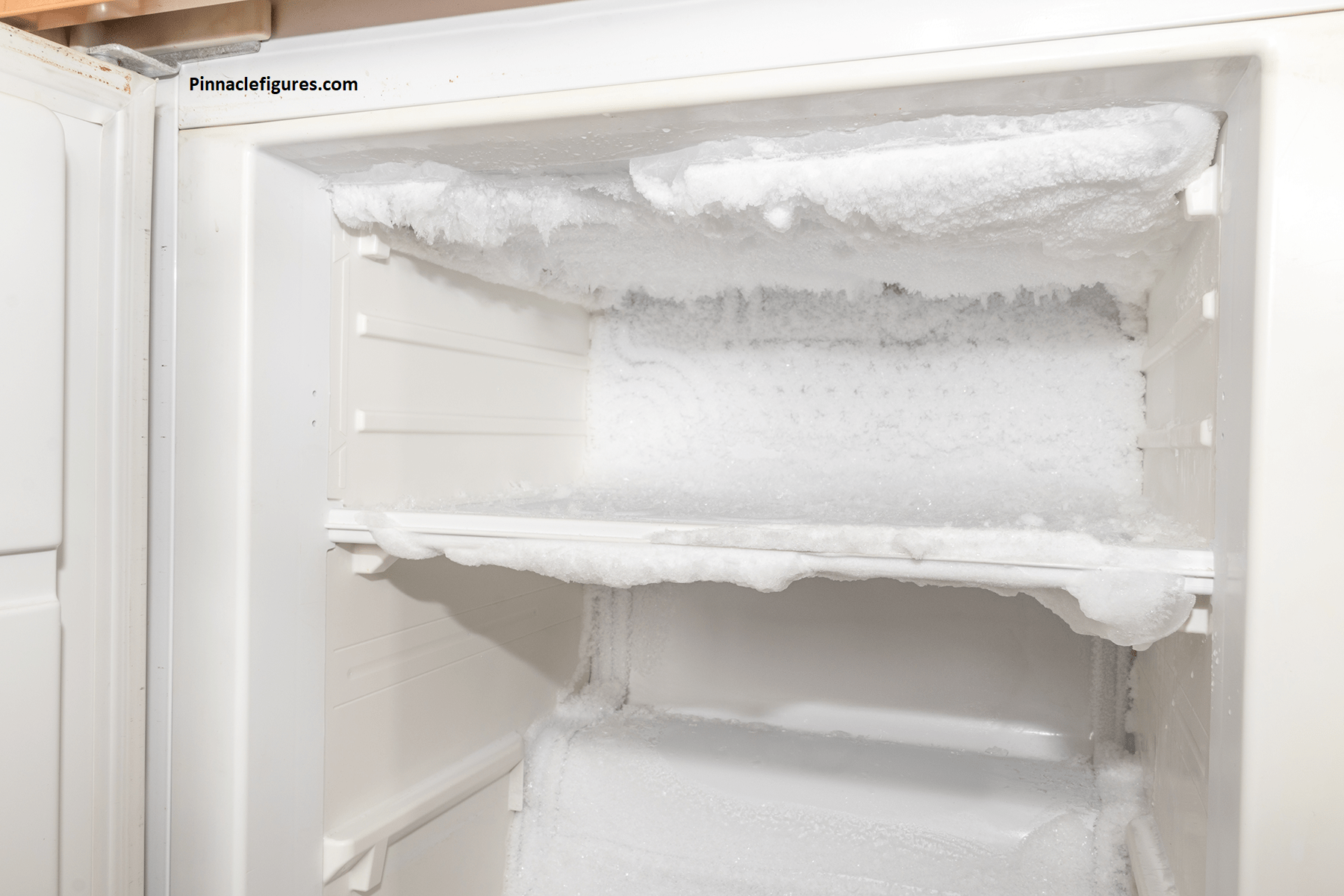
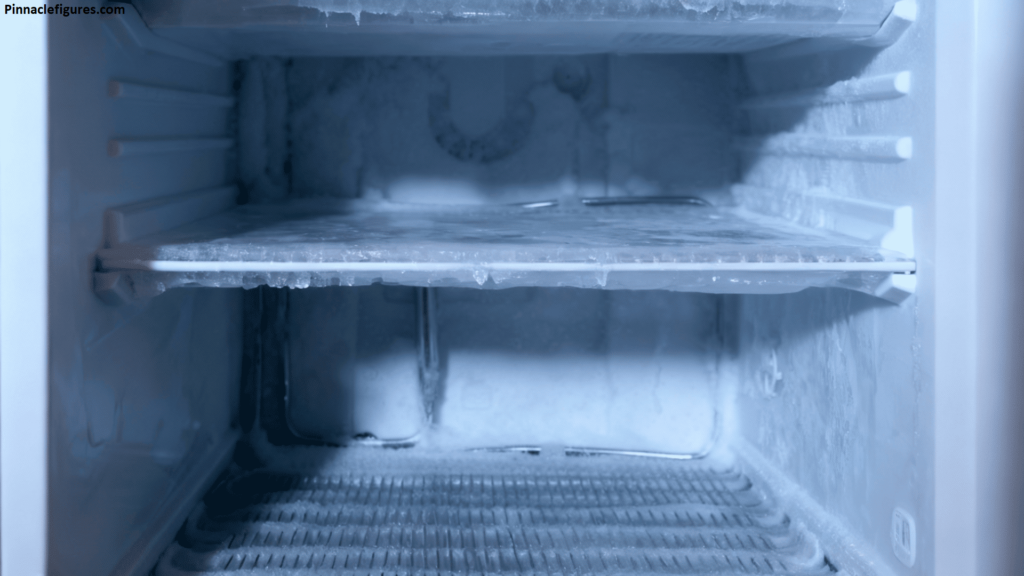
Why Is My Freezer Frosting Up? That thick layer of ice building inside your freezer isn’t just annoying — it’s a sign something’s off.
The most common culprit is warm, humid air sneaking in. Every time you open the freezer door, moisture enters. If the door seal is worn or loose, that happens constantly — even when you’re not looking.
Other causes include a faulty defrost system, a blocked drain, or simply overpacking the freezer so air can’t circulate properly.
Frost buildup reduces efficiency, spikes your energy bill, and shortens your appliance’s life.
Table of Contents
Quick Table
| Cause | How It Happens | Warning Sign | Fix |
|---|---|---|---|
| Worn Door Seal | Warm air leaks in constantly | Frost around door edges | Replace gasket seal |
| Frequent Door Opening | Moisture enters each time | General frost buildup | Limit opening, close quickly |
| Faulty Defrost System | Ice isn’t melting on schedule | Thick ice on back wall | Reset or replace defrost timer |
| Blocked Drain | Water can’t drain properly | Ice pooling at bottom | Clear drain with warm water |
| Overpacking | Air can’t circulate freely | Uneven frost throughout | Reorganize, reduce contents |
| Temperature Set Too Low | Excess cold accelerates frost | Heavy frost everywhere | Adjust to 0°F / -18°C |
Why Is My Freezer Frosting Up?
Last winter, I opened my chest freezer to grab some chicken and found the whole inside looking like the set of Frozen. Ice was caked on every surface — half an inch thick in some spots.
My bag of peas was basically a brick entombed in a glacier. I didn’t even know where to start.
Turns out, I’d been making a rookie mistake for months without realizing it. And once I figured out the real cause, fixing it was actually pretty simple.
If your freezer is frosting up, you’re probably in a similar situation — confused, maybe a little frustrated, and wondering if something is seriously wrong.
The good news? Nine times out of ten, it’s not a big deal. Let’s walk through exactly what’s happening and how to fix it.
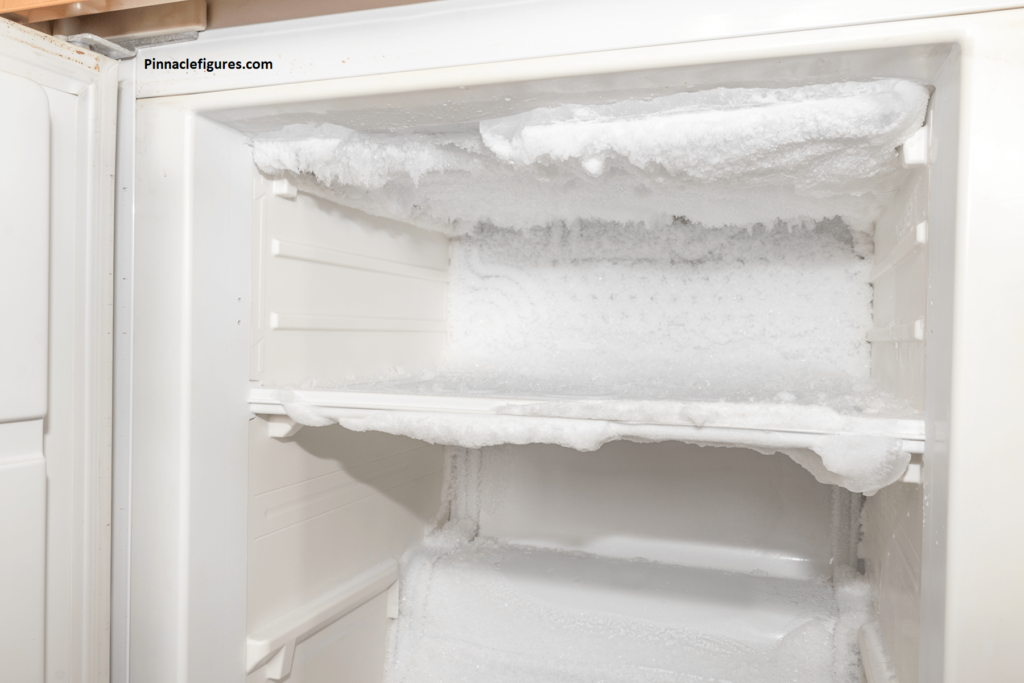
What’s Actually Happening When Frost Builds Up
Here’s the basic science without making it boring.
Your freezer works by cycling cold air.
Every time warm, humid air gets inside — from the outside, from food, from anything — that moisture freezes when it hits the cold walls and coils. Over time, that frozen moisture layers up into frost.
A little frost? Totally normal.
A quarter inch here and there is no big deal. But when it gets thick — like, you’re chipping away at ice with a butter knife thick — then something’s going wrong that’s letting too much warm air or moisture in.
The Most Common Reasons Your Freezer Is Frosting Up
The Door Isn’t Sealing Properly (This Was My Problem)
This is the #1 cause and also the easiest to overlook.
The rubber gasket — that squishy seal around the door — is supposed to create an airtight barrier. But over time, it warps, gets dirty, or just wears out.
Even a tiny gap lets warm air sneak in constantly, and that air is loaded with humidity.
How to check it: Take a piece of paper, close it in the door, and try to pull it out. If it slides out easily, your seal is weak. Do this at multiple points around the door.
I tried this test on mine and — sure enough — the paper slid right out on the bottom corner. The gasket had been slowly warping for who knows how long.
Quick fix: Clean the gasket with warm soapy water. Sometimes dirt buildup causes it to not sit flat.
If it’s cracked or torn, you can order a replacement gasket for most fridge/freezer models on Amazon or directly from the manufacturer — usually $15–$40.
You’re Opening the Door Too Often or Leaving It Open
I know, I know — this sounds like something your mom said when you were a kid staring into the fridge. But there’s a real reason for it.
Every time you open that door, warm room air rushes in. The freezer then has to work overtime to cool everything back down, and all that moisture in the warm air freezes on contact.
During a big meal prep session, I used to just leave my freezer cracked open while I worked. Bad idea. Frost would build up noticeably just from that one session.
What to actually do: Know what you need before you open the door. Get it quickly. Close it firmly. It sounds annoyingly simple, but it genuinely makes a difference over days and weeks.
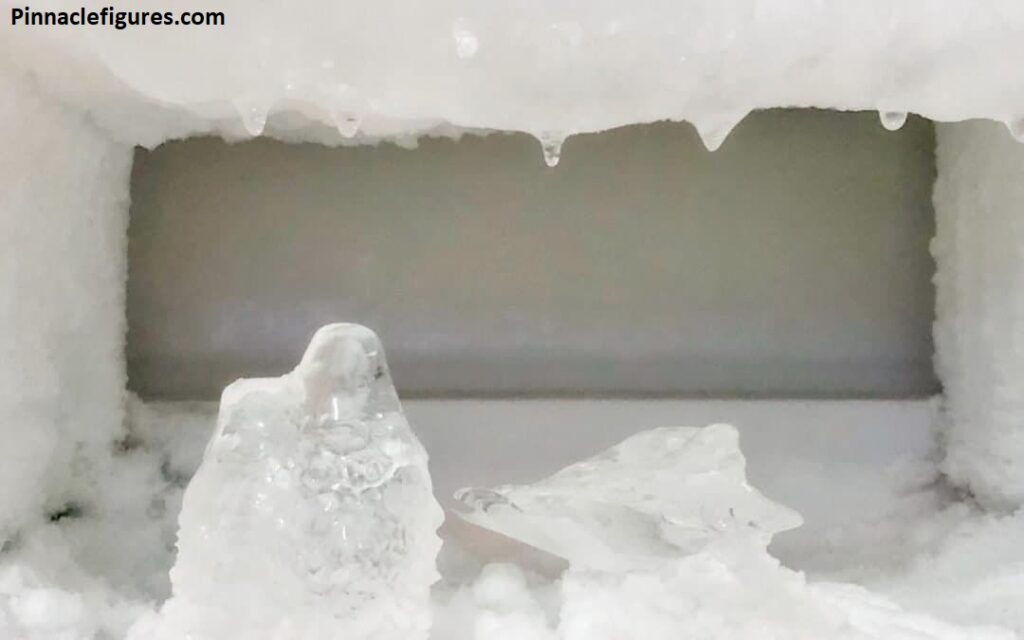
You’re Putting Warm or Hot Food Straight In
This one surprised me when I first read about it. Putting a hot pot of soup directly into the freezer is a double problem — it makes your freezer work harder AND dumps a ton of steam/humidity right into the enclosed space.
That moisture has nowhere to go except freeze onto every surface it touches.
The fix: Let hot food cool down to room temperature before freezing it. Ideally, put it in the fridge first for a bit. It’s also better for food safety — putting hot food in a freezer can actually raise the internal temperature and put other food at risk.
Freezer Is Overpacked (Or Underpacked)
Both extremes are a problem, weirdly.
An overpacked freezer blocks airflow. Cold air can’t circulate properly, which creates warm spots. Moisture collects and freezes in those warm spots unevenly.
An underpacked freezer has too much empty air space that gets humid when the door opens. All that air gets cycled through repeatedly, depositing moisture each time.
The sweet spot is roughly 75–80% full. Enough food to keep things cold efficiently, but enough space for air to move around.
The Freezer Temperature Is Set Too Low (Or Too High)
If the temperature swings too much — or is set way too cold — it can actually affect how efficiently the defrost cycle works.
Most freezers have an automatic defrost cycle that runs periodically to melt minor frost buildup before it gets out of control. But if the temperature is set too low (below 0°F/-18°C is typically ideal), the defrost cycle might not be able to keep up.
Check your setting: Use a freezer thermometer — I use a basic AcuRite one that cost me about $10 — to verify the actual internal temp, not just what the dial says. Dials can be inaccurate.
The Defrost System Is Broken
If none of the above apply, and the frost is coming back aggressively within days of defrosting, the issue might be mechanical.
Modern freezers have an automatic defrost system that includes:
- A defrost timer
- A defrost heater
- A defrost thermostat
If any of these fail, the freezer never properly clears its frost and it just keeps building. A telltale sign: your freezer forms thick frost even when you’re barely using it and the seal is perfect.
This is where you’d want to call a repair tech or do a little more digging with a multimeter if you’re the DIY type.
It’s worth fixing because a freezer with a failed defrost system also runs less efficiently and your electricity bill will show it.
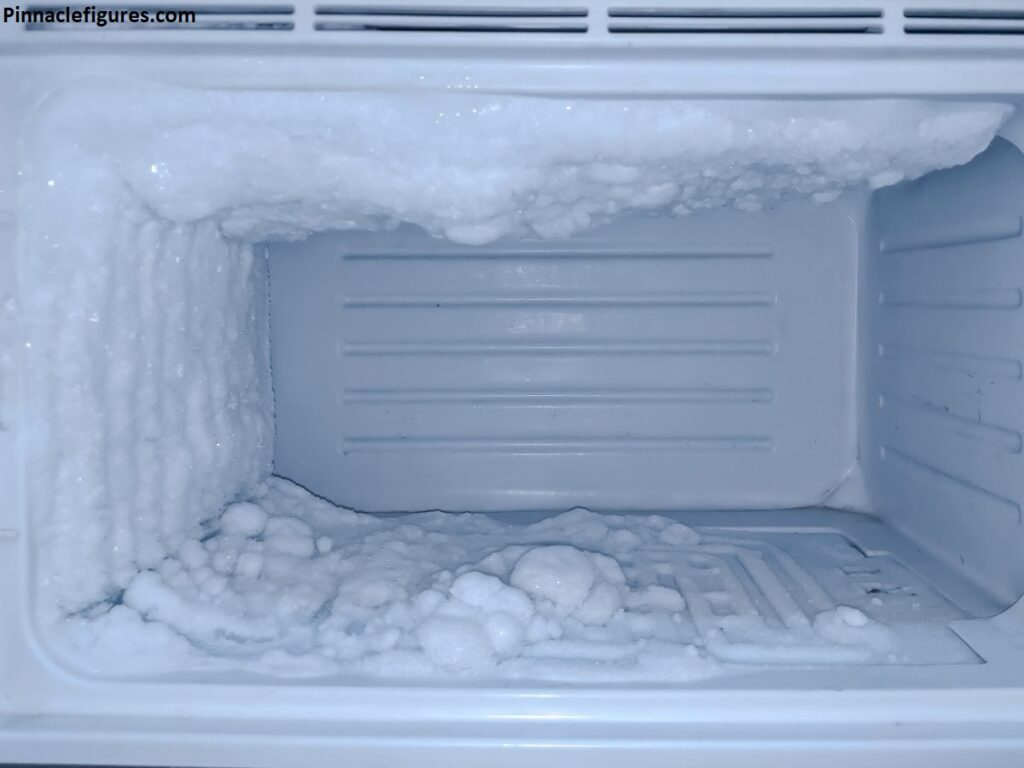
Step-by-Step: How to Defrost Your Freezer the Right Way
If you’re already dealing with a frost problem, here’s how to actually deal with it:
Empty the freezer. Move everything into a cooler with ice packs. Try to work fast — frozen food can stay safe for about 2 hours at room temperature.
Turn the freezer off. Unplug it or switch it off at the control panel.
Leave the door open. Put towels on the floor to catch the meltwater. Let it thaw naturally — don’t try to speed things up with a hair dryer near the coils, as that can damage them.
Wipe everything down. Once the ice is gone, dry the inside completely. Any moisture left behind becomes the first layer of your next frost problem.
Check the gasket and clean it before turning the freezer back on.
Turn it back on, wait a few hours for it to reach temperature, then restock it — not too full, not too empty.
Mistakes People Make When Dealing with Frost Buildup
- Chipping at ice with sharp objects. You can puncture the lining or damage the coils. I’ve seen people do this. Don’t.
- Ignoring it for months. The thicker it gets, the harder your freezer has to work and the more electricity it uses.
- Replacing the whole freezer when the gasket just needed cleaning. Seriously — check the simple stuff first.
- Putting the freezer too close to a wall or heat source. It needs airflow around the back and sides. If it’s crammed in a tight space next to the oven, it’ll struggle.
When to Actually Worry
Most frosting issues are caused by the stuff listed above. But call a repair person if:
- Frost comes back within 2–3 days of a full defrost
- You hear unusual clicking or humming sounds from the freezer
- The motor seems to be running constantly without cycling off
- Food isn’t staying properly frozen even without visible ice buildup
These can signal a compressor issue, a failed defrost component, or a refrigerant leak — things that need professional attention.
The Takeaway
My freezer saga ended pretty anticlimactically. I defrosted everything, cleaned the gasket with dish soap, and pushed the freezer a couple inches away from the wall so it could breathe. The frost hasn’t come back in any significant way since.
It’s one of those things where once you know what causes it, it almost feels obvious. Warm air in, moisture freezes — you just need to find where the warm air is getting in.
Start with the gasket test. It takes 30 seconds and solves the problem more often than you’d expect.
FAQ’s
Is freezer frost dangerous?
Not immediately, but it’s a problem worth fixing. Excessive frost forces your freezer to work harder, raises energy costs, reduces storage space, and can eventually damage the appliance or compromise food quality.
How often should I defrost my freezer?
For manual-defrost freezers, once or twice a year is standard — or whenever frost exceeds ¼ inch thick. Frost-free models handle this automatically, so if they’re frosting up, something mechanical is likely wrong.
Can a bad door seal really cause that much frost?
Absolutely. A worn or warped gasket lets warm, humid air seep in continuously — even with the door closed. It’s one of the most common and most overlooked causes of frost buildup.
Why is frost forming only on the back wall?
That usually points to a defrost system issue. The back wall is where the evaporator coils sit — if the automatic defrost cycle isn’t triggering properly, ice accumulates there first.
Will frost buildup fix itself?
No. It only gets worse over time. The sooner you identify and address the cause, the less damage — and the lower your energy bill.
Conclusion
A little frost in your freezer might seem harmless — easy to ignore, easy to work around. But left unaddressed, it quietly creates bigger problems:
higher electricity bills, overworked components, uneven temperatures, and food that doesn’t stay as fresh as it should.
The frustrating part is that most frost issues stem from something small. A seal that’s slightly off. A drain that’s partially blocked.
A habit of leaving the door open a few seconds too long. None of these feel significant in the moment — but over days and weeks, they add up to a freezer that’s fighting against itself.
The good news is that freezer frost is one of the more fixable appliance problems out there. You don’t always need a technician.
A visual inspection of the door seal, a quick temperature check, and a look at how the freezer is packed can tell you a lot. Most fixes cost very little — or nothing at all.
What matters is not ignoring it. Frost buildup is your freezer’s way of telling you something is off. Listen early, and a simple adjustment solves it. Wait too long, and you’re looking at repairs — or a replacement.
