
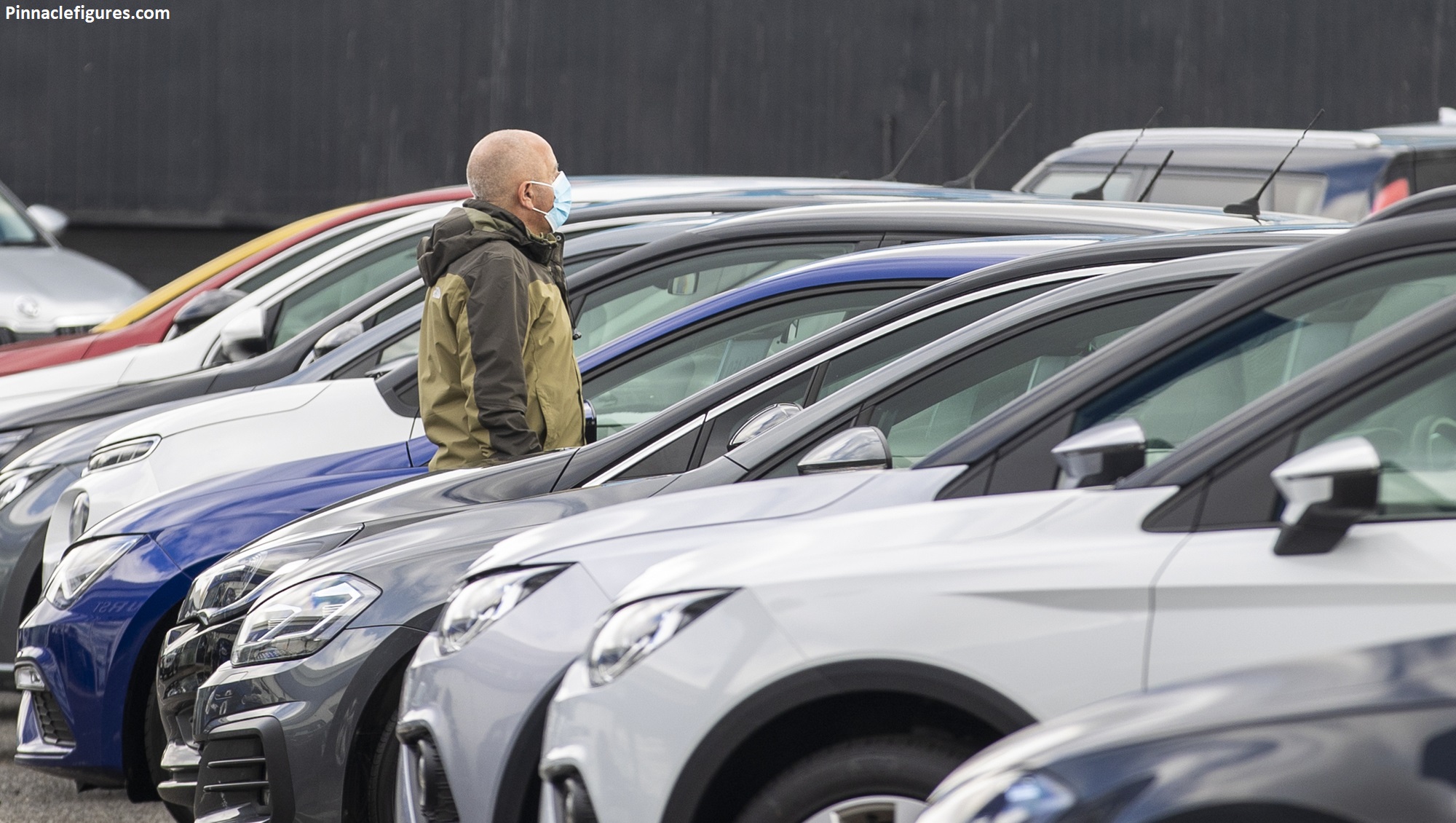
Why Are Used Cars So Expensive? The used car market has become a source of genuine frustration for millions of buyers, and the reasons behind the stubbornly high prices are rooted in a perfect storm of economic and industrial disruptions that began several years ago and continue to ripple through the market today.
It started with the global semiconductor shortage, which crippled new car production on a massive scale.
With factory output dramatically reduced, fewer new vehicles reached dealership lots, forcing buyers who would normally purchase new cars to turn to the used car market instead.
This sudden and overwhelming surge in demand for used vehicles pushed prices to historic highs almost overnight.
Inflation compounded the problem further, raising the cost of everything from auto parts to labor, which in turn drove vehicle values even higher across the board.
The pandemic also played a significant role, as major rental car companies sold off large portions of their fleets during the height of the crisis, temporarily flooding the used market before creating a significant supply gap once demand recovered.
Dealerships seized the opportunity to add substantial markups above already elevated market values, squeezing buyers even further.
Table of Contents
Quick Table
| Cause | Impact | Current Status |
|---|---|---|
| Semiconductor Shortage | Slowed new car production massively | Gradually improving |
| High Demand | Buyers flooded used market when new cars were scarce | Still elevated |
| Inflation | Raised vehicle values and operating costs | Partially easing |
| Rental Fleet Reductions | Created supply gap after pandemic sell-off | Slowly recovering |
| Dealer Markups | Added significant cost above market value | Still common |
| Supply Chain Disruptions | Delayed parts and vehicle availability | Improving but fragile |
| Low Inventory | Fewer vehicles available at all price points | Gradually increasing |
| Rising Interest Rates | Increased cost of financing a vehicle | Remains high |
Why Are Used Cars So Expensive?
I still remember the moment it hit me. I was standing in a used car lot in 2023, staring at a 2018 Honda Civic with 74,000 miles on it — and the sticker said $22,500.
My jaw actually dropped. A five-year-old car. With mileage that basically screams “highway commuter.” For twenty-two and a half thousand dollars.
I’d been shopping for a used car for three weeks by that point, and I thought I had a decent read on the market. I was wrong.
The used car market has become one of the strangest, most frustrating places to spend money — and if you’re in the middle of it right now, this article is for you.
Let me break down exactly why this is happening, what I learned the hard way, and how you can actually navigate it without getting burned.
The Chip Shortage Left a Ghost in the Machine
This one is the root cause of everything else, and it still hasn’t fully resolved.
Between 2020 and 2022, the global semiconductor shortage crippled new car production.
Manufacturers like Toyota, Ford, GM, and Honda had to cut production by millions of units. Not thousands — millions. Some factories went idle for months.
What happens when new car supply collapses? People turn to the used car market.
Demand exploded while inventory stayed flat — or actually shrank, because fewer people were trading in their cars when they couldn’t buy new ones.
That classic supply-and-demand squeeze sent used car prices to record highs. The Manheim Used Vehicle Value Index — which is basically the S&P 500 of used cars — shot up over 50% at its peak in late 2021.
Even now, in 2026, the new car inventory still hasn’t fully recovered.
There are cars that were never built. That gap in the production pipeline has had a long tail, keeping used car prices elevated far longer than most analysts expected.
Rental Companies Are Not Your Friend Here
Here’s something that doesn’t get talked about enough: rental fleets.
During the pandemic, companies like Hertz, Avis, and Enterprise sold off huge chunks of their fleets to raise cash. They basically dumped cars into the used market all at once.
That helped temporarily, but then something unexpected happened — when travel came back, they needed cars again.
So what did they do? They started buying used cars aggressively, competing directly with regular consumers at auctions and dealerships.
Enterprise and Hertz aren’t shopping at CarGurus the way you do, but their wholesale purchasing behavior filters through the entire market.
When rental companies are competing for the same pool of used vehicles, prices go up. It’s that simple.
Financing Costs Changed Everything (And a Lot of Buyers Don’t Realize It)
I made a mistake early in my car search. I was focused on the sticker price without thinking enough about total cost.
Interest rates went from near-zero to above 7% on auto loans in a pretty short window. What does that actually mean in practice?
Let’s say you’re financing $22,000 over 60 months.
- At 3% interest: monthly payment ≈ $395, total paid ≈ $23,700
- At 7.5% interest: monthly payment ≈ $441, total paid ≈ $26,460
That’s nearly $2,800 more over the life of the loan — on the same car. Higher rates also pushed some buyers who would’ve bought new cars into the used market instead, which again compresses supply.
The rate environment is a huge piece of why the effective cost of a used car feels so much heavier right now, even setting the sticker price aside.
Dealers Got Smart (Read: Aggressive)
Pre-pandemic, you could walk into a dealership, point at a used car, and expect to negotiate maybe a few hundred bucks off. The used car market had some friction, but it was navigable.
After 2020, dealers figured out something important: they didn’t have to negotiate anymore. Cars were selling fast.
They started adding “market adjustment” fees — sometimes $2,000 to $5,000 above the listed price — and people were paying them because they had no other options.
Some of that has eased off. But dealerships have also gotten better at pricing their inventory algorithmically.
They use tools like vAuto and DealerSocket that pull real-time market data and price each car at or near what the data says it can fetch. There’s less room for the old-school negotiation tactics because the pricing is already market-calibrated.
That doesn’t mean you can’t negotiate — but you need to go in with more data than before.
The “Certified Pre-Owned” Trap
One thing I fell for early on: seeing a CPO (Certified Pre-Owned) badge and assuming it meant a deal.
CPO programs — from Toyota, Honda, BMW, Mercedes, and others — do offer real benefits: extended warranties, multi-point inspections, sometimes roadside assistance. But they also come with a premium, sometimes 10–15% over a comparable non-certified vehicle.
For some buyers, that peace of mind is worth it. For others, especially if you plan to get an independent inspection anyway, you’re paying for something you don’t need.
I almost bought a CPO Honda CR-V that was $4,200 more than an almost identical non-certified one at a different lot. The difference? One had the badge, one didn’t. Both had clean Carfax reports.
The lesson: CPO is a feature, not a guarantee of value. Always compare CPO prices against non-certified alternatives before you commit.
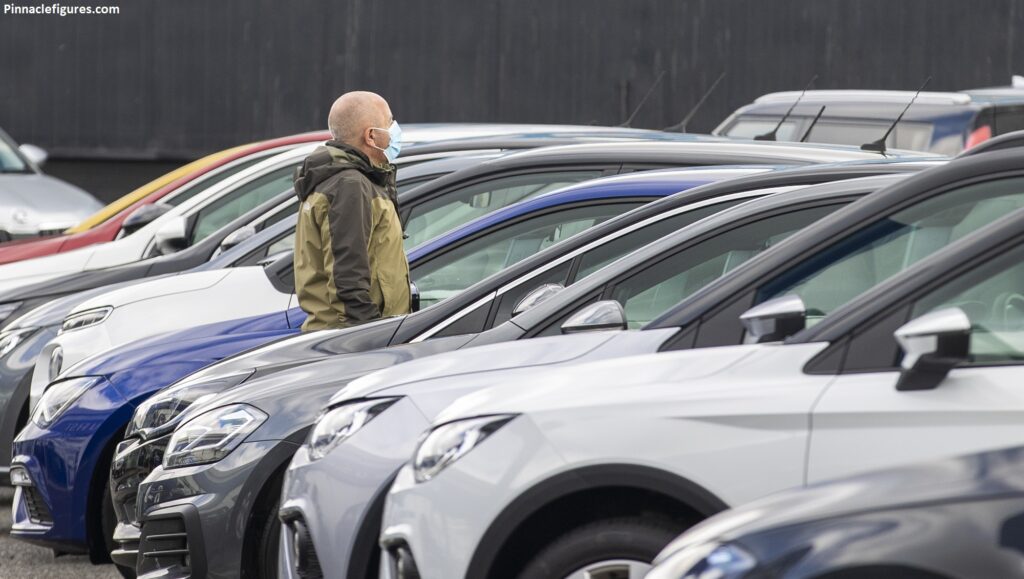
What Depreciation Used to Look Like (And Doesn’t Anymore)
Old rule of thumb: a car loses about 20% of its value in the first year, and around 50% over five years.
That rule is broken right now.
In some cases, used cars are selling for more than their original MSRP — or very close to it. A 2022 Toyota Tacoma that stickered for $38,000 new might be asking $36,000 used with 25,000 miles. That’s almost zero depreciation.
Some buyers are actually underwater on cars they financed at peak prices in 2021-2022. They owe more than their car is worth. That’s a mess that will take years to unwind.
The practical implication: if you’re buying used specifically to “save money on depreciation,” that logic doesn’t apply right now the way it used to.
You need to do the math on each specific vehicle rather than assuming used = big savings.
How to Actually Shop Smart Right Now
Okay, enough doom and gloom. Here’s what I actually did to find a decent deal after weeks of frustration:
Use multiple platforms, not just one. I used CarGurus, AutoTempest, Carvana, and Facebook Marketplace simultaneously. Each has a different inventory mix. Facebook Marketplace in particular has private-party sellers who often price below retail.
Set price alerts. CarGurus lets you set alerts when a specific make/model drops in price. I set one for the Honda Civic and got an alert when one dropped $1,800 in a single day (dealer needed to move inventory at month-end).
Expand your geography. I was locked onto dealers within 30 miles of me. When I expanded to 100 miles and factored in the cost to drive or transport, I found cars $3,000–4,000 cheaper. Sometimes a market an hour away is much less competitive.
Get a pre-purchase inspection. Always. Non-negotiable. A mechanic inspection costs $100–$150 and can save you from a $4,000 surprise. I use Lemon Squad or a local trusted mechanic. Never buy used without one.
Check the VIN before falling in love. Carfax is fine, but also run it through the NHTSA recall database (nhtsa.gov) and NICB’s VINCheck for theft records. Carfax misses things.
Time your purchase. End of the month, end of the quarter, and January (post-holiday) tend to be better times to negotiate. Dealers have quotas, and a hungry salesperson is a better conversation.
Common Mistakes to Avoid
- Skipping the inspection because “the dealer says it’s fine.” Dealers are not mechanics. Get an independent one.
- Focusing only on monthly payment. This is how dealerships get you. Always know the total price, the rate, and the term.
- Not knowing what you should pay. Look up the average transaction price on Carfax Market Insights, iSeeCars, or Kelley Blue Book before stepping on a lot.
- Letting emotional attachment drive the offer. I almost overpaid $3,000 for a red Mazda3 just because I liked the color. Cool it.
- Ignoring total cost of ownership. Insurance, fuel economy, maintenance costs, and parts availability matter. A cheap BMW can become an expensive BMW very fast.
Will Used Car Prices Come Down?
Honestly? Gradually, yes. But not to pre-2020 levels anytime soon.
New car production is slowly recovering, which takes pressure off the used market. Interest rates have started coming down from their peak, which helps buyers. And some of those 2021–2022 purchases will start cycling into the used market as people trade up or sell.
But the structural issues — rental fleet dynamics, algorithmic dealer pricing, and the lingering production gap — mean that used cars will stay pricier than they “should” be by historical standards for a few more years.
If you can wait, waiting isn’t a bad strategy. If you need a car now, go in armed with data, be patient, and don’t let urgency rush you into a bad deal.
The car market will keep moving. Your job is just to make sure you move smarter than it does.
FAQ’s
Will used car prices ever go back to normal?
Prices are gradually declining from their peak levels, but most automotive experts agree that a full return to pre-pandemic pricing is unlikely in the near future. As new car production continues to recover and inventory levels improve, used car prices should continue to ease gradually, though the process is slow and uneven across different vehicle types and markets.
Is it better to buy new or used right now?
The answer depends on your budget and priorities. In some cases, the price gap between new and used vehicles has narrowed enough that buying new with manufacturer incentives and warranties makes more financial sense. It is worth comparing both options carefully before making a decision, factoring in total cost of ownership, financing rates, and long term reliability.
Why are older used cars still so expensive?
Even older, higher mileage vehicles have retained unusually high values because overall inventory remains tight. When buyers cannot afford newer used models, demand shifts to older and cheaper alternatives, driving up prices across the entire used car spectrum regardless of age or condition.
Are online car marketplaces cheaper than dealerships?
Online platforms like CarMax, Carvana, and private seller marketplaces can sometimes offer more competitive pricing than traditional dealerships, largely because their overhead costs are lower. However, it is always important to factor in delivery fees, inspection costs, and the absence of in person negotiation when comparing prices across different buying channels.
How can I get the best deal on a used car right now?
Getting the best deal requires patience, research, and flexibility. Compare prices across multiple platforms, get a pre purchase inspection from an independent mechanic, consider less popular makes and models that carry lower demand premiums, and be willing to negotiate firmly. Getting pre approved for financing before shopping also gives you significantly more leverage at the negotiating table.
Conclusion
The used car market has undergone a dramatic and painful transformation over the past several years, leaving buyers across every income level grappling with prices that would have seemed unthinkable not long ago.
What began as a supply chain crisis triggered by a global semiconductor shortage quickly snowballed into a broader economic disruption that touched every corner of the automotive industry.
Surging demand, inflation, depleted rental fleets, aggressive dealer markups, and rising interest rates all combined to create a market environment that heavily favored sellers over buyers for an extended period of time.
While there are encouraging signs that the market is slowly correcting itself as new vehicle production ramps back up and inventory levels gradually improve, meaningful relief for the average buyer is still coming in slowly and unevenly.
The experience has also permanently changed how many people approach car buying, with more consumers turning to online marketplaces, considering alternative transportation options, and holding onto their existing vehicles longer than ever before.
Navigating the used car market today requires more research, patience, and financial savvy than it ever has in the past.
Armed with the right knowledge and a clear understanding of what is driving prices, buyers can still find reasonable deals and make smart decisions even in a challenging market.
