
Why Do Cats Lay on You? Cats may seem fiercely independent, but when they choose to lay on you, it is one of the clearest signs of trust and affection in their behavioral repertoire.
Your body offers warmth, a steady heartbeat, and a familiar scent — all deeply comforting to a cat’s senses.
In the wild, cats huddle with trusted companions for safety and heat, and your lap is simply the domestic version of that instinct.
Laying on you also marks you as theirs, as cats have scent glands that deposit their unique signature onto whatever they rest on. Simply put, you are their favorite, safest place.
Table of Contents
Quick Table
| Reason | Details |
|---|---|
| Warmth | Your body heat is a natural comfort source, especially for cats who love warm surfaces |
| Affection | Laying on you is a sign of deep trust, bonding, and love toward their favorite human |
| Security | Your presence makes them feel safe and protected, mimicking wild huddle behavior |
| Scent Marking | Cats have scent glands and use resting on you to claim you as their own |
| Heartbeat | The rhythm of your heartbeat is soothing and reminiscent of their mother’s comfort |
| Anxiety Relief | Stressed or anxious cats seek out their trusted human for emotional reassurance |
| Attention Seeking | Some cats lay on you simply because they want pets, play, or interaction |
| Territorial Instinct | Resting on you reinforces their social bond and establishes you within their territory |
| Routine & Habit | Cats are creatures of habit and return to comfortable, familiar resting spots consistently |
| Health Sensing | Some cats are drawn to areas of illness or pain on the body, acting almost instinctively |
Why Do Cats Lay on You?
My cat Mochi has this thing she does every single night.
The moment I sit down on the couch — doesn’t matter if I’m about to eat dinner, open my laptop, or literally just sat down for two seconds — she materializes out of nowhere and plops herself directly on my chest. Not beside me. Not near me. On me.
For the longest time I thought it was just her being weird. Then I got a second cat (a big orange boy named Figs), and he did the exact same thing.
That’s when I started actually wondering: okay, what is going on here?
Turns out there’s a lot more happening than just your cat being clingy.
Let me walk you through what I’ve learned — through a mix of obsessive late-night Googling, talking to my vet, and just years of being a human cat bed.

They’re Not Being Cute. They’re Being Strategic.
Here’s the first thing that surprised me: cats are actually warm-seeking missiles.
A cat’s body temperature runs a little higher than ours — somewhere around 101–102°F. To maintain that, they’re constantly hunting for heat sources.
Your body pumps out a steady 98.6°F all day long. From a cat’s perspective, you’re basically a radiator with a heartbeat.
I noticed this most in winter. During summer, Mochi will sleep on the cool tile floor without a second thought.
The second the temperature drops, she’s back on my lap like she never left. Once I made that connection, a lot of things clicked.
It’s not random. It’s warmth-seeking behavior, and you happen to be the most reliable heat source in the house.
But It’s Also About Trust — More Than You Think
Okay, so warmth explains part of it. But Figs does this thing where he’ll walk past three perfectly warm spots just to come lie on my legs specifically. That’s not about temperature. That’s something else.
Cats in the wild are both predators and prey. Because of that, they’re incredibly selective about where they sleep.
Sleeping = vulnerable. And they will only put themselves in a vulnerable position somewhere — or with someone — they genuinely trust.
When your cat chooses to lay on you, they’re essentially saying: I feel safe here. I feel safe with you.
My vet actually told me this when I brought it up at Mochi’s annual checkup. She said cats don’t fake comfort.
They don’t do social niceties the way dogs sometimes do. If a cat is relaxed and sleeping on you, that’s about as sincere as it gets.
Honestly? That hit different. I started thinking about all those times I’d gently move Mochi off my lap because I needed to get up, and the way she’d always come back.
Not out of stubbornness — out of genuine attachment.
Your Smell Is Part of It Too
This one’s a little weird but bear with me.
Cats are smell-oriented in a way humans really can’t fully appreciate. They have scent glands around their faces, paws, and tails.
When they rub against you or lay on you, part of what they’re doing is marking you as theirs. Not in a creepy ownership way — more like a “this person is part of my group” way.
Your clothes, especially worn ones, carry your scent. I once left a hoodie on the couch and Mochi slept on it for three days straight while I was traveling.
My partner texted me a photo of it and I almost cried.
So when they lay on you directly, they’re soaking in your scent and layering theirs onto you. It’s a bonding behavior.
Social grooming and shared scent-marking are how cats communicate “you belong to my family.”
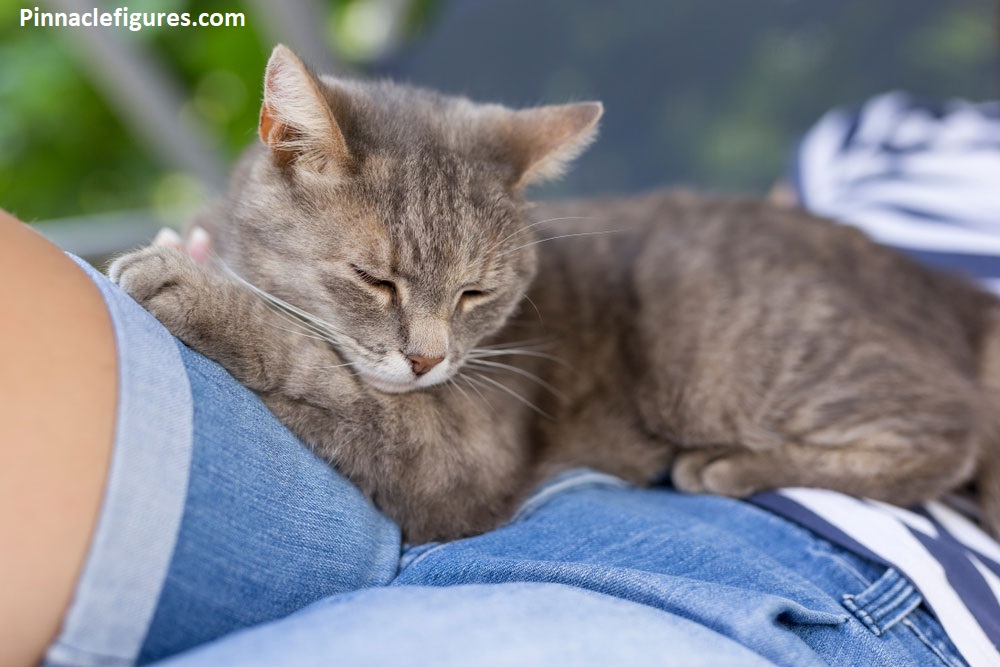
The Heartbeat Theory (And Why It Might Actually Be Real)
I was skeptical of this one at first because it sounds almost too poetic. But multiple cat behaviorists actually back it up.
Kittens grow up sleeping against their mothers, listening to a steady heartbeat. That rhythm becomes associated with safety, warmth, and food.
When your cat lies on your chest — specifically your chest — they may be responding to that same primal comfort signal.
Mochi always prefers my chest over my legs. Always. And she always starts purring within about thirty seconds. I don’t think that’s coincidence anymore.
Why Some Cats Do It More Than Others
Not all cats are equally “lapy.” I used to think it was just personality, and partially it is — but there are real factors behind it.
- Socialization in kittenhood matters a lot. Cats that were handled by humans frequently in their first few weeks of life are generally more comfortable with physical closeness.
- Figs came from a foster home where he was bottle-fed by humans. That boy has zero concept of personal space and I love him for it.
- Breed plays a role. Ragdolls, Burmese, and Siamese cats are known for being intensely people-oriented. Meanwhile, some breeds — like certain Russian Blues — are affectionate but more on their terms.
- Past experiences matter. A cat that was rehomed multiple times or had unpredictable early life experiences might take much longer to feel safe enough to lay on you. One of my friends adopted a three-year-old rescue cat who didn’t sit on her lap for almost eight months. Then one day he just did it, and now he won’t leave her alone.
If your cat doesn’t lay on you, it doesn’t mean they don’t love you. It might just mean they’re still getting there — or they show affection differently.
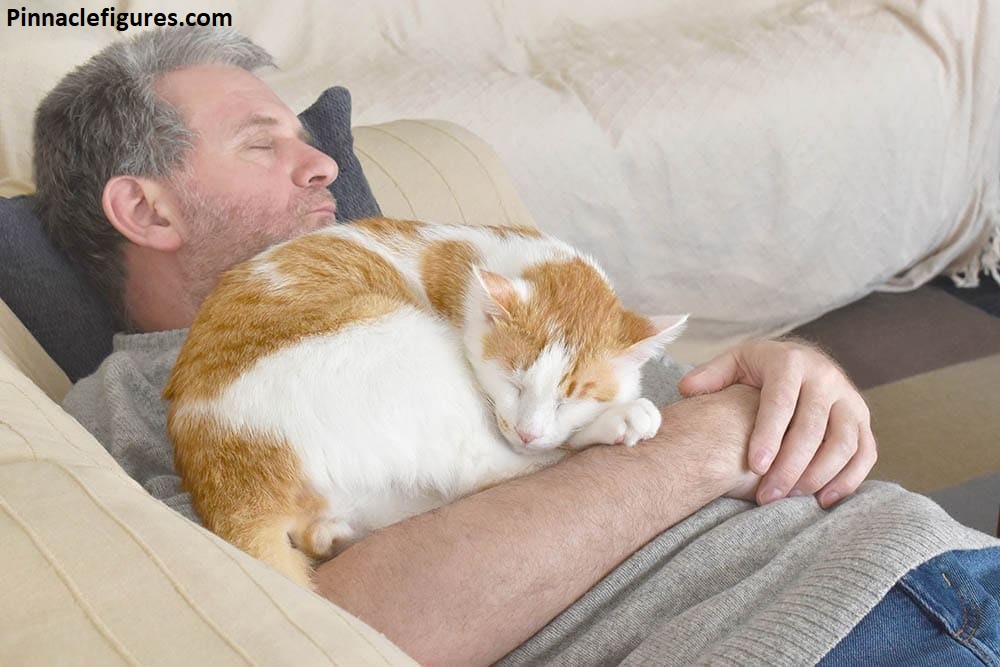
What to Do (and Not Do) When Your Cat Lays on You
Here’s where I made some early mistakes.
- Don’t move suddenly. I used to jolt up the second my phone buzzed or I remembered something I needed to do. Mochi would startle, jump off, and then eye me suspiciously for the next hour. Over time I noticed she started approaching me less. Once I trained myself to move slowly and gradually — giving her a gentle warning pat before getting up — she started trusting lap-time more.
- Don’t force it. If your cat doesn’t want to lay on you, picking them up and plopping them on your lap usually backfires. You’ll get the stiff, about-to-escape posture instead of the melted-into-you purring thing. Let them come to you.
- Reciprocate calmly. A gentle hand on their back or slow strokes tend to reinforce the behavior. High-energy petting can overstimulate some cats and turn a relaxing moment into a bitey one (I have learned this the hard way, multiple times, with Figs specifically).
- Notice the patterns. Cats are creatures of habit. Mochi almost always shows up when I settle in after dinner. Figs appears whenever I’m on a video call (why do they always know). If you notice when your cat gravitates to you, you can lean into those moments.
When It Could Mean Something Else
Most of the time, your cat laying on you is a pure positive. But occasionally it can be worth paying attention.
If your cat suddenly starts laying on a specific part of your body way more than usual — say, always your stomach, or always pressing against the same spot — some people and vets have noted that cats sometimes seem to detect changes in human body chemistry or temperature that relate to illness.
There’s no hard science on this being diagnostic, but it’s been reported enough times to be interesting.
More practically: if a cat who never laid on you suddenly starts doing it constantly, and is also acting lethargic or eating differently, that’s worth a vet visit. Sometimes cats seek extra closeness when they’re not feeling well themselves.
The Part Nobody Talks About
Here’s something I’ve come to genuinely appreciate after years of living with cats: the way they choose to be near you is different from most pets.
Dogs are enthusiastic and indiscriminate in their affection — they’ll love the mailman just as much as you if he gives them attention. Cats are different. They’re selective. Deliberate.
When Mochi crawls onto my chest at 10pm and starts purring against my sternum, she’s not doing it out of obligation or training. She’s doing it because she wants to be there, with me, in that moment.
That’s not a small thing.
So yeah — cats lay on you because you’re warm, because you smell like home, because your heartbeat is calming, and because somewhere along the way, you became the safest place in their world.
Honestly, being someone’s safest place? I’ll take that.
FAQs
Why does my cat only lay on me and not other people?
Cats are highly selective about who they trust. If your cat chooses you specifically, it means you are their primary source of comfort, security, and affection. Your scent, voice, and daily routine have made you their safe person.
Is it healthy to let your cat lay on you?
Generally, yes. The bond it reinforces is beneficial for both you and your cat. Studies suggest that a purring cat on your lap can lower stress, reduce blood pressure, and even improve mood, making it a mutually rewarding experience.
Why does my cat lay on my chest specifically?
Your chest is close to your heartbeat and voice — two deeply familiar and soothing sensations for a cat. It is one of the most intimate spots they can choose, signaling an especially strong bond and level of trust.
Why does my cat knead before laying on me?
Kneading is a comforting behavior rooted in kittenhood, when kittens knead their mother to stimulate milk. When your cat kneads before settling on you, it is expressing deep contentment and treating you with the same warmth as a maternal figure.
Should I move my cat if they are laying on me?
If it is comfortable and safe for both of you, there is no need to move them. However, if you must get up, do so gently and calmly to avoid startling your cat and potentially damaging the trust they have placed in you.
Conclusion
When your cat chooses to lay on you, it is far more than a simple act of comfort-seeking — it is a profound expression of trust, love, and belonging that speaks to the very heart of the human-animal bond.
Cats are not obligated to seek our company. Unlike dogs, they have not been bred over centuries for dependence on humans.
When a cat voluntarily curls up on your chest, drapes across your legs, or tucks itself under your arm, it is making a deliberate and meaningful choice.
You are their warmth, their safety, their home. That quiet, purring weight is carrying centuries of feline instinct, softened by genuine affection.
It is a reminder that even the most independent creatures are capable of deep connection when they feel truly secure.
For cat owners, these moments are among the most tender and rewarding in daily life — a stillness that asks nothing of you except your presence.
So the next time your cat settles on you and begins to purr, resist the urge to check your phone or rush off. You have been chosen. Savor it, because in the language of cats, there is no higher compliment.
