
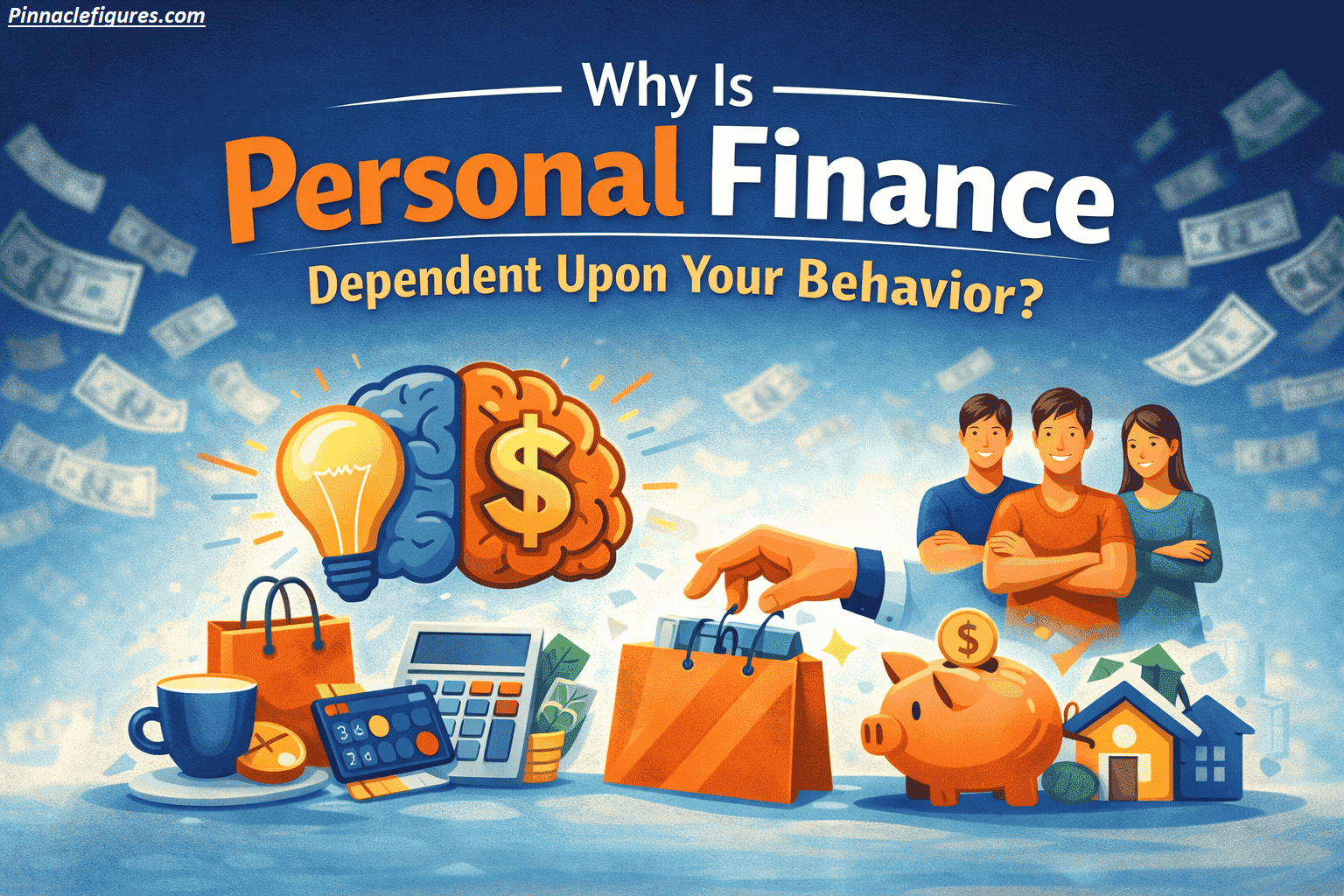
Why Is Personal Finance Dependent Upon Your Behavior? Personal finance is less about math and more about habits. You can know every rule — spend less, save more, invest early — but if your behavior doesn’t align, the knowledge means nothing.
Impulse spending, emotional purchases, lifestyle inflation, and social pressure quietly drain wealth before you even notice. No app or strategy works if you keep overriding it with poor daily decisions.
Conversely, simple consistent behaviors — automating savings, pausing before purchases, living below your means — compound powerfully over time.
Your bank account is essentially a scoreboard of your daily choices. Change the behavior, and the finances follow.
I remember sitting at my laptop one night, staring at my bank account balance, genuinely confused. I had a decent job. I wasn’t spending money on anything crazy. But somehow, every month ended with me wondering where it all went.
So I did what most people do — I Googled “how to save money,” read about 15 different budgeting tips, downloaded a couple of apps, and felt really motivated for about four days.
Then life happened. A dinner out here. An impulse Amazon order there. A “I’ll just skip the budget this week” moment that turned into a month.
Table of Contents
Quick Table
| Behavior | Financial Impact |
|---|---|
| Impulse Spending | Drains savings fast |
| Automating Savings | Builds wealth consistently |
| Lifestyle Inflation | Cancels income growth |
| Delayed Gratification | Grows long-term wealth |
| Emotional Spending | Leads to regret & debt |
| Budgeting Regularly | Keeps spending in check |
| Social Pressure Spending | Derails financial goals |
| Investing Early | Maximizes compounding returns |
Why Is Personal Finance Dependent Upon Your Behavior?
Personal finance is less about math and more about habits. You can know every rule — spend less, save more, invest early — but if your behavior doesn’t align, the knowledge means nothing.
Impulse spending, emotional purchases, lifestyle inflation, and social pressure quietly drain wealth before you even notice.
No app or strategy works if you keep overriding it with poor daily decisions.
Conversely, simple consistent behaviors — automating savings, pausing before purchases, living below your means — compound powerfully over time.
Your bank account is essentially a scoreboard of your daily choices. Change the behavior, and the finances follow.
Your Money Habits Are Just That — Habits
Think about the last time you bought something you didn’t plan to. Maybe it was a coffee when you were already running late, or a new pair of shoes because they were “on sale.”
You didn’t sit down and rationally calculate whether it fit your budget. You just… did it.
That’s behavior. And it’s running your finances whether you realize it or not.
Behavioral economists like Daniel Kahneman have spent decades studying this. Our brains are wired to seek immediate rewards and avoid discomfort. Saving money for retirement 30 years from now?
That gives your brain nothing exciting today. But buying that gadget or booking that trip? Instant dopamine hit.
This isn’t a character flaw. It’s biology. But once you understand it, you can start working with your brain instead of against it.
The Day I Realized I Was My Own Worst Financial Enemy
A few years back, I was making more money than I ever had. Got a nice raise, felt great about it, told myself I’d finally start saving properly.
What actually happened? My lifestyle inflated almost immediately. Better restaurant, nicer gym membership, more streaming subscriptions, a slight upgrade in the car.
Within six months, I was saving the same percentage I always had — which was not much.
This is called lifestyle creep, and it’s one of the sneakiest behavioral traps in personal finance.
Nobody sat me down and told me to spend more. I just… did. Automatically. Because my reference point for “normal spending” shifted upward the moment my income did.
The lesson I learned the hard way: income growth without behavioral awareness doesn’t build wealth. It just builds a more expensive lifestyle.

The Real Behaviors That Determine Your Financial Future
Let me break down the specific behaviors that actually matter — not in a lecture-y way, but based on what I’ve actually seen make a difference.
How You React to Stress and Emotions
This one caught me off guard. Turns out a huge chunk of financial decisions happen when we’re not in a calm, rational state. Stress shopping is real. So is “screw it, I’ve had a rough week, I deserve this” spending.
Tracking my purchases for three months revealed a pattern I didn’t want to admit: I spent the most money on Friday evenings after a hard work week.
Not on anything big, but consistent little things — takeout, online shopping, random subscriptions I’d forget about.
Once I saw the pattern, I could do something about it. I started keeping a simple note on my phone called “Friday wants” — stuff I felt like buying on Friday night.
If I still wanted it Tuesday, I’d consider it. Most of the time I forgot about it completely.
Whether You Automate or Rely on Willpower
Willpower is a limited resource. Counting on yourself to manually transfer money to savings every month is like counting on yourself to always take the stairs. Sometimes you will. Mostly you won’t.
The single biggest financial behavior shift I made was automating everything. The day my salary hits, a fixed amount goes straight to a high-yield savings account (I use Marcus by Goldman Sachs, though there are plenty of solid options), and another chunk goes into index funds.
I never “decide” to do it — it just happens.
What’s left is what I spend. Simple as that.
Automation removes the behavioral friction entirely. You don’t need discipline if the decision is already made.

How You Handle Social Pressure Around Money
This is a big one that doesn’t get enough attention. A lot of financial decisions aren’t really your decisions — they’re responses to social expectations.
Going on a vacation you can’t afford because your friend group is going. Buying a house because “that’s what adults do at your age.” Getting a nicer car because your neighbors just got one.
I spent two years driving a beat-up 2009 Honda Civic while my friends upgraded to newer cars.
Genuinely awkward sometimes. But when those same friends were stressing about car payments, I was putting that money into investments. That car-buying behavior gap ended up compounding significantly over time.
Your financial decisions don’t happen in a vacuum. They happen in a social context. Recognizing that pressure for what it is — other people’s behavior patterns being projected onto you — is a genuinely valuable skill.
Your Relationship With Delayed Gratification
Every financially sound decision involves choosing a future benefit over a present one. Save now, enjoy later. Invest now, retire comfortably later. Pay off debt now, have freedom later.
This is hard for a lot of people because the future feels abstract. One thing that helped me was making the future feel more concrete.
I started attaching specific goals to my savings. Not just “emergency fund” but “3-month emergency fund so I never have to take a job I hate out of desperation.
” Not just “retirement savings” but “enough to stop working at 55 if I want to.”
Giving the future version of yourself a face makes it easier to make present sacrifices for them.

Practical Steps to Actually Change Your Financial Behavior
Here’s where the rubber meets the road. Not just understanding why behavior matters, but doing something about it.
- Track everything for 30 days without judgment. Use whatever works — YNAB (You Need A Budget), Mint, or even a simple spreadsheet. Don’t change anything yet. Just observe. You’ll probably be surprised by something.
- Identify your specific triggers. Is it stress? Boredom? Social situations? Late nights on Amazon? You’re looking for patterns, not perfection.
- Automate the most important decisions first. Set up automatic transfers to savings and investments before anything else. Even if it’s a small amount — start somewhere.
- Build in a “pause” for non-essential purchases. The 48-hour rule works well: anything over a certain amount (I use $50) waits 48 hours before I buy it. The desire for a surprising number of things fades completely during that window.
- Design your environment to make good behavior easier. Unsubscribe from retail marketing emails. Delete shopping apps from your home screen.
Move your investment account to a separate bank so transfers feel slightly more intentional. Friction is your friend when you’re trying to spend less.
Common Mistakes People Make When Trying to Fix Their Money Behavior
- Trying to be perfect from day one. Behavioral change is gradual. A budget you can stick to 80% of the time beats a perfect one you abandon after two weeks.
- Relying on motivation instead of systems. Motivation fluctuates. Systems are consistent. Build the system, and you won’t need to feel motivated every single day.
- Ignoring the emotional side entirely. Some people swing the other way and try to be completely robotic about money. That usually backfires. You need some room for enjoyment — planned fun spending — or the whole thing feels like punishment.
- Comparing your situation to others. Social media makes this worse than ever. You’re seeing curated highlights, not their credit card statements. Someone who looks like they have it all together financially might be one emergency away from crisis.
- Thinking one big financial decision will fix everything. “Once I get this raise / pay off this loan / close this deal, I’ll start saving properly.” The behavior that got you here follows you to the next income level. Work on the behavior, not just the numbers.
The Long Game
Here’s the thing nobody tells you clearly enough: personal finance plays out over decades. The behavioral choices you make today don’t show their full consequences for years — sometimes decades.
That’s both the challenge and the opportunity.
The friend who started investing at 25 instead of 35 isn’t smarter. They didn’t have more money. They just had a behavior — consistency — that compounded over time in a way that’s genuinely hard to catch up with.
Your financial situation right now is mostly a reflection of past behaviors. Your financial situation ten years from now will mostly be a reflection of the behaviors you build today.
The math of personal finance is simple. The behavior is what’s hard. But behavioral change, unlike luck or a winning lottery ticket, is actually within your control.
FAQs
Can good income fix bad financial behavior?
No. High earners go broke all the time. Income without discipline just funds a bigger lifestyle.
What’s the first behavior to change?
Automate your savings. Remove the decision entirely — it’s the highest-impact shift you can make.
Is budgeting enough?
Only if you stick to it. A budget is a plan; behavior is what executes it.
How long does it take to build good money habits?
Most habits solidify around 60–90 days of consistent practice.
Can emotions really affect finances?
Absolutely. Stress, boredom, and social pressure are among the biggest hidden spending triggers.
Conclusion
Personal finance was never really about numbers — it was always about you. The spreadsheets, apps, and budgeting systems are just tools.
They only work when the person using them shows up consistently. Every small daily decision — what you buy, what you skip, what you automate — quietly shapes your financial future.
Nobody builds wealth accidentally, and nobody stays broke without a behavioral reason behind it. The good news? Behavior is changeable.
Start with one habit, build from there, and give it time. Your financial life will reflect exactly who you choose to become.
Your bank account doesn’t lie — it reflects every choice, habit, and impulse you’ve acted on. That’s not meant to discourage you; it’s actually empowering.
Because if behavior built the problem, behavior can rebuild the solution. You don’t need a perfect salary or a lucky break. You need consistency, self-awareness, and a willingness to pause before you spend.
The people winning financially aren’t necessarily smarter — they just have better daily habits. Start small, stay honest with yourself, and remember that every good financial decision compounds over time.
The best day to change your behavior was yesterday. Today works too.
