
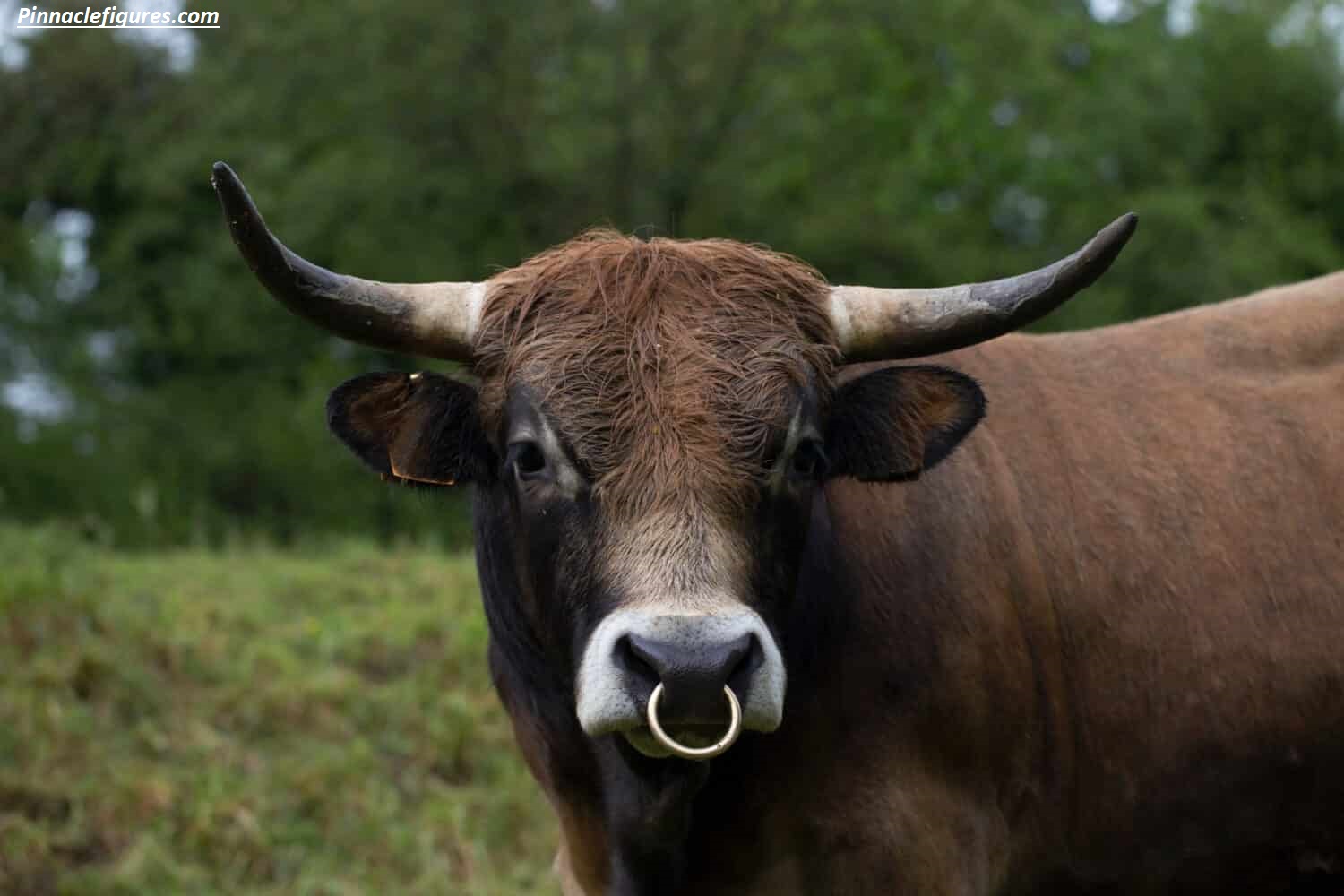
Why Do Bulls Have Nose Rings? If you’ve ever seen a bull being led calmly through a show ring or loaded into a livestock trailer without incident, there’s a good chance a small piece of metal through its nose made the difference between routine handling and a life-threatening situation.
Bull nose rings are one of the oldest and most universally recognized tools in livestock management. Yet despite their widespread use, many people — farmers, animal welfare advocates, and curious onlookers alike — still have questions about why they’re used, how they work, and whether they’re humane.
Table of Contents
Quick Table
| Factor | Purpose of Nose Ring | How It Works | Who Uses It | Key Benefit |
|---|---|---|---|---|
| Control & Handling | Manage large, powerful animals | Ring is placed in sensitive nasal septum | Farmers, livestock handlers | Easier and safer control |
| Safety | Prevent aggressive behavior | Pressure applied gently guides movement | Ranchers, breeders | Reduces risk of injury |
| Training | Teach obedience from a young age | Calves learn to respond to pressure cues | Cattle trainers | Improves long-term handling |
| Breeding Management | Control breeding bulls | Bulls are easier to lead and isolate | Dairy & beef farms | Prevents accidents during mating season |
| Veterinary Handling | Assist during medical exams | Allows secure restraint without force | Veterinarians | Safer treatment process |
| Transport | Easier loading/unloading | Guides direction in tight spaces | Transport handlers | Minimizes stress and chaos |
| Traditional Practice | Long-standing livestock method | Widely adopted across farming cultures | Global agriculture industry | Proven, reliable technique |
| Animal Welfare (When Used Properly) | Reduces need for forceful methods | Gentle pressure replaces physical struggle | Ethical livestock management | Less harm if handled correctly |
How and When This Practice Began
The use of nose rings to control cattle is not a modern invention. It is one of the earliest documented forms of livestock restraint in human history.
Ancient Origins: Mesopotamia, Egypt, and Early Domestication
Cattle were first domesticated approximately 8,000–10,000 years ago in the region of the Fertile Crescent (modern-day Turkey, Syria, and Iraq).
Archaeological evidence from Mesopotamian and Egyptian sites shows that early herders used nose ropes, rings, and pegs to control draft animals as far back as 3000–2500 BCE.
Carvings from ancient Sumerian and Egyptian tomb art depict oxen and cattle being led by rings or ropes through the nose — visually indistinguishable in concept from modern practices.
The nasal control point was identified very early as the most effective restraint location for large bovines.
Key archaeological entities:
- Ur (ancient Sumerian city) — early cattle herding reliefs
- Ancient Egypt — tomb artwork showing ringed cattle
- Çatalhöyük (Turkey) — early domestication site evidence
2.2 Medieval and Early Modern European Livestock Practices
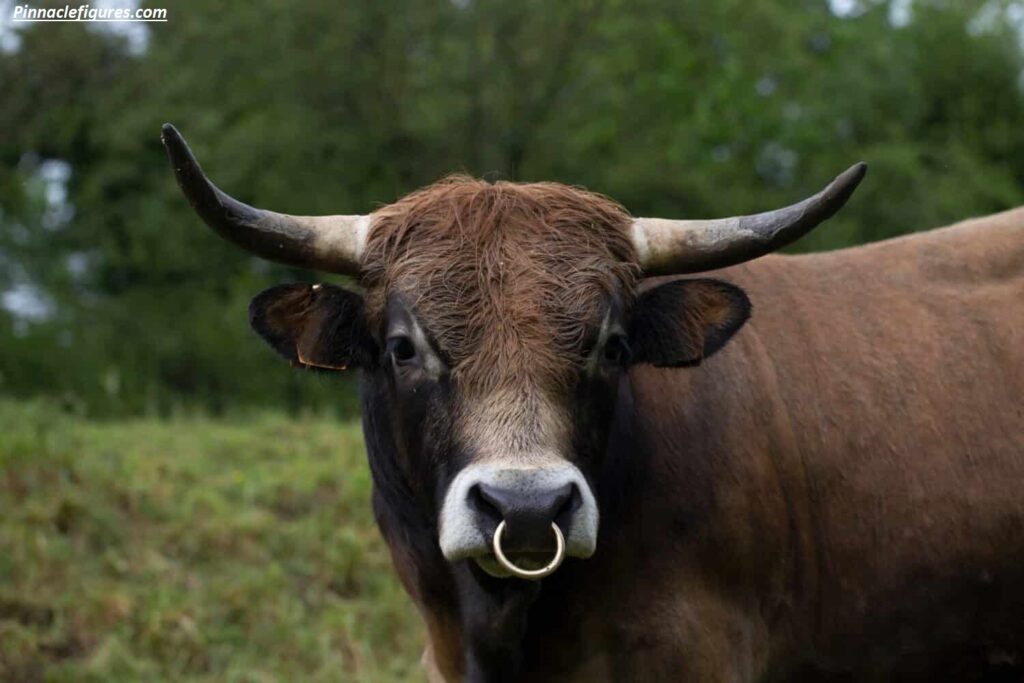
Through the Roman Empire and into medieval Europe, cattle were central to agricultural economies. Oxen were used as draft animals, and their control was critical for plowing, transport, and trade. Nose rings — made from iron or bronze — became standard equipment among European farmers during this period.
By the 16th and 17th centuries, as selective breeding produced increasingly large and powerful bulls for both beef and dairy purposes, the nose ring transitioned from primarily a draft-animal tool to a safety device for managing intact (uncastrated) males.
2.3 Spread to North America, Australia, and Latin America
European settlers brought their cattle management traditions to the Americas and Australasia during the 17th–19th centuries. The practice became deeply embedded in the ranching cultures of Texas, Montana, Alberta, Brazil, Argentina, and New South Wales.
Today, nose rings remain standard equipment across all major cattle-producing regions of the world, with only minor variations in ring style, material, and application method.
Cultural Significance Beyond Western Farming
In South Asia, particularly in India and Pakistan, cattle have profound cultural and religious significance.
Working bulls used for plowing or cart-pulling are routinely ringed, with the practice considered a responsible husbandry standard.
In Sub-Saharan Africa, pastoral communities managing large herds of zebu cattle use nose rings as primary handling tools, often employing traditional ring styles passed down through generations.
Why Bulls Are Dangerous: Understanding Bull Behavior and Temperament
To understand why nose rings exist, you must first understand why bulls specifically — as opposed to cows or steers — require them.
How Bulls Differ from Cows in Temperament and Physiology
| Characteristic | Bull (intact male) | Steer (castrated male) | Cow (female) |
|---|---|---|---|
| Average weight | 1,500–2,500 lbs | 1,000–1,800 lbs | 900–1,400 lbs |
| Testosterone level | High | Very low | Low |
| Aggression risk | High | Low | Low–moderate |
| Predictability | Variable | High | High |
| Restraint needs | Significant | Minimal | Minimal |
Testosterone plays the central role. Intact bulls produce significantly higher levels of androgens — hormones that drive territorial behavior, dominance displays, and aggression, particularly during the breeding season.
A bull in rut (peak breeding condition) can shift from calm to dangerous within seconds, with little observable warning to the untrained eye.
Physical factors compounding the risk:
- An average beef bull weighs 1,800–2,200 lbs (820–1,000 kg)
- Bulls can reach speeds of 25 mph over short distances
- They can generate enormous force from the head and neck
- Their fight instinct — unlike cattle’s typical flight instinct — is elevated
Documented Risks of Unrestrained Bull Handling
Bull-related injuries are among the most serious in agricultural workplaces. According to occupational health research in the United States, Australia, and the United Kingdom, cattle (bulls specifically) are responsible for a disproportionate share of fatal and serious injuries on farms relative to their numbers.
(Source: Agricultural Safety Journals, multiple peer-reviewed studies, 2010–2023)
The U.S. Bureau of Labor Statistics and the UK’s Health and Safety Executive both list cattle handling as one of the highest-risk agricultural tasks.
A nose ring does not eliminate this risk — but it significantly reduces it by giving the handler a control point.
The Role of Dominance Behavior in Herd Animals
Bulls operate within a dominance hierarchy. When a handler approaches without a reliable control mechanism, the bull may perceive the human as a challenger, prey item, or obstacle.
The nose ring reframes this dynamic — applying pressure to the nasal septum creates a discomfort signal that the bull responds to instinctively, redirecting its attention and movement toward relieving that pressure (i.e., following the handler’s direction).
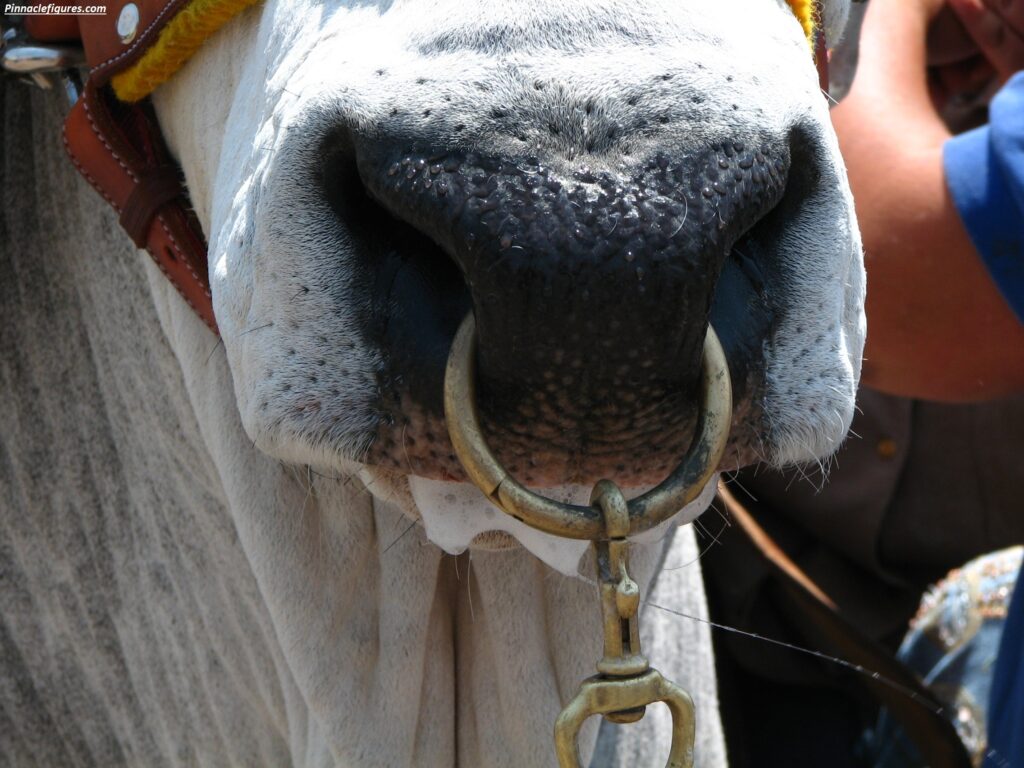
How Does a Bull Nose Ring Actually Work? The Biomechanics Explained Anatomy of the Nasal Septum in Cattle
The nasal septum is the cartilaginous partition between a bull’s two nostrils. This area has several anatomical properties that make it the ideal location for a control ring:
- High nerve density — The nasal region is richly innervated. Pressure here creates a strong, immediate sensory signal without causing lasting tissue damage (when correctly placed and cared for).
- Cartilaginous structure — The septum is firm enough to hold a ring securely, but soft enough to pierce without major surgery.
- Midline placement — A ring placed centrally allows bidirectional control — pulling left, right, up, or down with predictable effect.
- No major blood vessels — When correctly placed, the piercing site avoids major vascular structures, reducing bleeding risk.
The Mechanics of Leverage
The physics are straightforward. When a handler applies tension to a lead rope or bull staff attached to the nose ring, the ring transmits that tension as pressure to the highly sensitive nasal septum.
The bull’s natural response is to move in the direction that relieves the pressure — which is the direction the handler is guiding it.
This creates effective steering control over an animal that outweighs the handler by a factor of 10–15:1.
Why the nose works better than other locations:
- A halter on the head provides leverage but does not create the same immediate sensory response
- Ear tags provide identification but zero control
- Body restraints require multiple handlers and physical effort
- The nasal septum provides a single-point, one-person control mechanism
Nose Ring Control vs. Halter Control
| Control Method | Lever Effectiveness | Handler Safety | Animal Stress | Equipment Cost |
|---|---|---|---|---|
| Nose ring + bull staff | Very high | High | Low (once healed) | Low ($5–$35) |
| Nose ring + lead rope | High | Moderate | Low | Low |
| Halter only | Moderate | Low–moderate | Low | Low |
| Squeeze chute | Very high | Very high | Moderate–high | High ($500–$3,000+) |
| Electric prod | Low–moderate | Moderate | High | Low–moderate |
Types of Bull Nose Rings: Materials, Sizes, and Designs
Not all nose rings are equal. The right ring depends on the bull’s breed, age, purpose, and the handler’s specific management context.
Comparison Table: Ring Types by Material
| Material | Pros | Cons | Best For | Typical Cost |
|---|---|---|---|---|
| Stainless steel | Durable, rust-resistant, hygienic | Higher cost, heavier | Long-term use, dairy bulls | $8–$30 |
| Brass | Traditional, strong, smooth finish | Can tarnish, slightly reactive | Show bulls, working bulls | $5–$20 |
| Copper | Antimicrobial properties, soft on tissue | Less durable, can corrode | Young bulls, first-time ringing | $4–$15 |
| Aluminum | Lightweight | Less durable, may deform under force | Temporary use only | $3–$10 |
| Self-piercing (snap-in) | No applicator needed | Less secure, may dislodge | Emergency replacement | $5–$18 |
| Screw-close (traditional) | Very secure | Requires applicator tool | Standard permanent use | $5–$25 |
Sizing Guide: Diameter by Breed and Age
Ring size must match the bull’s anatomy to function correctly without causing excessive trauma or slipping out.
| Bull Category | Recommended Ring Diameter | Typical Gauge |
|---|---|---|
| Young bull (6–12 months) | 2.5–3 inches | 10–12 gauge |
| Mature beef bull | 3–3.5 inches | 8–10 gauge |
| Large breed bull (Brahman, Charolais) | 3.5–4 inches | 8 gauge |
| Dairy bull (Holstein, Jersey) | 2.75–3.25 inches | 10 gauge |
Temporary vs. Permanent Nose Ring Installations
Temporary rings are snap-fit designs used during specific handling events — veterinary procedures, transport loading, or temporary restraint. They are not designed for daily use and should not be left in unsupervised.
Permanent rings are screw-close or rivet-close designs intended to remain in place for the bull’s working life. They require periodic inspection for wear, corrosion, or tissue irritation.
Show Rings vs. Working Rings
Show rings tend to be more polished, with a cleaner aesthetic finish. They are typically made from high-grade stainless steel or plated brass and may be slightly lighter.
Working rings prioritize durability and grip, with thicker gauges and simpler finishes designed to withstand daily farm use.
Where to Buy Bull Nose Rings
In-store (near you):
- Farm supply chains: Tractor Supply Co. (TSC), Rural King, Orscheln Farm & Home, Co-Op Farm Stores
- Veterinary supply distributors
- Local agricultural co-operatives
- Feed and seed stores in rural areas
Online:
- Valley Vet Supply, Jeffers Livestock, PBS Animal Health
- Amazon Livestock & Farm categories
- Direct from manufacturers (Premier1 Supplies, Nasco Farm & Ranch)
Search tip: “bull nose rings farm supply near me” or “[your city] livestock equipment supplier” to find local stock.
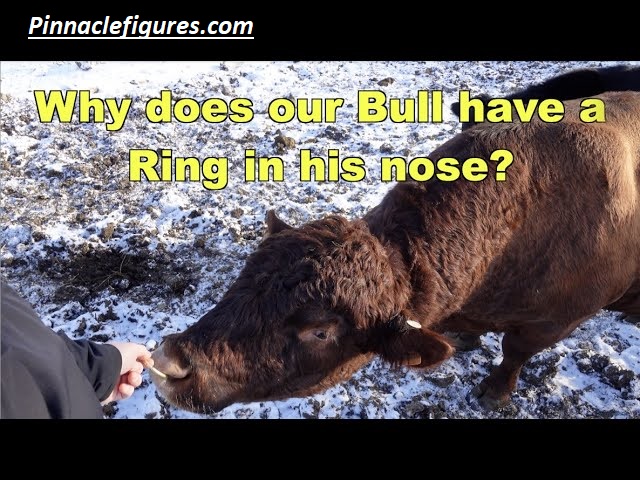
How to Put a Nose Ring in a Bull: Step-by-Step Procedure
This procedure should be performed by a licensed veterinarian or an experienced livestock handler. Improper technique can cause infection, excessive bleeding, or trauma to the animal. Always follow local animal welfare regulations.
Who Should Perform the Procedure?
| Handler Type | Recommended? | Notes |
|---|---|---|
| Licensed veterinarian | Best practice | Can administer local anesthetic, ensure sterile technique |
| Experienced farmer/stockman | Acceptable | Must have prior training and proper equipment |
| Beginner without supervision | Not recommended | High risk of error, animal injury, or handler injury |
Equipment Needed (Pre-Procedure Checklist)
- Bull nose ring (correct size and material for the bull)
- Bull ring applicator / nose punch tool
- Squeeze chute or cattle head gate (secure restraint)
- Antiseptic solution (iodine or chlorhexidine)
- Clean cloths or gauze
- Local anesthetic (lignocaine — veterinarian administered)
- Gloves (latex or nitrile)
- Assistant handler (recommended)
- Aftercare antiseptic spray
Step-by-Step Procedure
Step 1: Secure the bull Place the bull in a squeeze chute or head gate. The animal must be fully restrained and unable to move its head unpredictably. Never attempt this procedure without proper restraint equipment.
Step 2: Clean the nasal area Use antiseptic solution on a clean cloth to disinfect the nasal septum area. Remove any debris or mucous from the target zone.
Step 3: Administer local anesthetic (recommended) A veterinarian should inject a small amount of local anesthetic (typically lignocaine/lidocaine) into the nasal septum to reduce acute pain during piercing. Allow 3–5 minutes for it to take effect.
Step 4: Position the applicator Place the nose punch or applicator tool at the center of the nasal septum, approximately 0.5–1 inch from the tip of the nose (specific placement varies by breed and ring size). Ensure correct positioning — too far forward risks the ring slipping out; too far back risks cartilage complications.
Step 5: Pierce the septum and insert the ring Apply firm, controlled pressure with the applicator to create the piercing. Immediately insert the nose ring through the opening. Secure the ring by closing the screw closure or locking the snap mechanism.
Step 6: Post-procedure care Apply antiseptic spray to the piercing site. Monitor the bull for signs of excessive bleeding, swelling, or infection over the following 7–14 days. Keep the ring clean and inspect it weekly during the healing period.
Best Age to Ring a Bull
Most experienced stockmen and veterinarians recommend ringing bulls between 6 and 12 months of age. The rationale:
- The septum is still relatively thin and easier to pierce cleanly
- The bull is large enough that the ring won’t be outgrown too quickly
- The animal is old enough to be safely restrained in a chute
- Early ringing allows the bull to become accustomed to the ring before it reaches full adult size and aggression potential
Healing Time and Aftercare Protocol
| Phase | Timeframe | What to Expect |
|---|---|---|
| Acute post-procedure | Days 1–3 | Mild swelling, possible light bleeding, sensitivity |
| Active healing | Days 4–14 | Tissue closing around the ring, reduced swelling |
| Full healing | 2–4 weeks | Ring is comfortable and secured in healed tissue |
Aftercare best practices:
- Inspect daily for the first two weeks
- Apply antiseptic spray if redness or discharge is present
- Avoid attaching lead ropes to the ring for the first 2–3 weeks
- Ensure the bull’s environment is clean to prevent infection
Common Mistakes When Inserting a Bull Nose Ring
Avoid these errors:
- Placing the ring too close to the tip of the nose — insufficient tissue leads to tearing
- Using the wrong ring size — too small causes pressure sores; too large may fall out
- Skipping antiseptic protocol — leads to infection and abscess formation
- Attempting without proper restraint — dangerous to both animal and handler
- Not checking ring security — loose screw closures can lead to ring loss and re-injury
- Attaching a lead rope too soon — puts stress on healing tissue
Is a Bull Nose Ring Cruel? Animal Welfare Perspectives and the Ethical Debate
This is the question that generates the most public discussion — and it deserves a thorough, evidence-based answer.
Does the Nose Ring Cause Ongoing Pain?
Short answer: When correctly inserted and properly maintained, a healed bull nose ring does not cause chronic pain.
Veterinary consensus, supported by behavioral observation studies, indicates that:
- The acute pain of insertion is comparable to ear tagging or other common livestock procedures
- Once healed (2–4 weeks), bulls with properly fitted rings show no behavioral indicators of chronic pain — they eat, graze, breed, and socialize normally
- Pain indicators in cattle (grinding teeth, altered gait, reduced food intake, isolation) are not typically observed in bulls with long-standing, well-maintained rings
The nasal septum, once pierced, adapts around the ring. The ring only creates discomfort when tension is actively applied — which is precisely its function.
What Animal Welfare Organizations Say
| Organization | Position |
|---|---|
| AVMA (American Veterinary Medical Association) | Recognizes nose ringing as an accepted livestock management practice; recommends analgesia during insertion |
| RSPCA (UK/Australia) | Accepts nose rings as a management tool when performed humanely; advocates for pain relief during procedure |
| Animal Welfare Act 2006 (UK) | Does not prohibit nose rings; requires that suffering be minimized and that animals be cared for appropriately |
| EU Welfare Directives | Permits nose rings in cattle as a handling aid; requires competent persons to perform the procedure |
Pros and Cons: Decision Framework
| Pros | Cons |
|---|---|
| Dramatically improves handler safety | Requires an invasive piercing procedure |
| Reduces need for physical force | Carries risk of infection if poorly maintained |
| Allows one-person handling of large bulls | Can be used abusively (excessive force on ring) |
| Accepted by global livestock welfare standards | Some animal advocates oppose any invasive restraint |
| Low ongoing cost | Requires periodic inspection and replacement |
| Reduces animal stress vs. repeated physical restraint | Ring loss requires re-piercing |
Regulatory Status by Region
| Country/Region | Legal Status | Notes |
|---|---|---|
| United States | Legal — state-by-state variation | No federal prohibition; AVMA guidelines recommended |
| United Kingdom | Legal | Animal Welfare Act 2006 applies; competent persons required |
| Australia | Legal | Model Code of Practice for Livestock guides procedure |
| European Union | Legal | Council Directive 98/58/EC governs welfare standards |
| India | Legal | Common practice for working bulls; no specific national prohibition |
| New Zealand | Legal | Animal Welfare Act 1999 provides the framework |
Do All Bulls Need Nose Rings? Breed Differences and Exceptions
The short answer is: no — not every bull needs a nose ring. But most do, especially once they reach sexual maturity and begin displaying dominant behavior.
Breeds Most Commonly Ringed
Beef breeds:
- Angus — calm temperament but still routinely ringed for safe handling
- Hereford — docile by beef breed standards; ringing still standard practice
- Charolais — larger-framed, can be more unpredictable; nose ring strongly recommended
- Brahman — highly alert and reactive; ringing considered essential
- Simmental — large and powerful; ringing standard
- Limousin — known for high reactivity; ringing strongly recommended
Dairy breeds:
- Holstein — largest dairy breed; nose ringing common in AI stud bulls
- Jersey — deceptively aggressive despite small size; ringing highly recommended
Dairy Bulls vs. Beef Bulls: Different Needs?
Dairy bulls that are kept for natural service (on-farm breeding) are actually considered more dangerous per capita than many beef breeds, according to several agricultural safety studies.
This is because they are often raised around humans from birth — becoming desensitized to people — while retaining full testosterone-driven aggression.
A Jersey bull has caused fatal injuries on farms where handlers let their guard down due to the animal’s small size.
Most commercial dairy operations now use artificial insemination (AI), removing the need for an on-farm bull entirely. Where bulls are kept, ringing is considered essential.
When a Nose Ring Is NOT Necessary
Some situations where a nose ring may be deferred or unnecessary:
- Young calves (under 6 months) — insufficient septum development; too early
- Steers (castrated males) — dramatically reduced aggression makes rings unnecessary
- Bulls managed exclusively in isolated paddocks with no direct human handling
- Extremely docile, well-trained bulls in low-handling environments (rare)
- Bulls used only for AI semen collection in secure facilities with full restraint equipment
Even in the above cases, most experienced stockmen still recommend ringing as a precautionary measure once the bull reaches 9–12 months.
Regional Practices: How Nose Ring Use Differs by Geograph
North America (Texas, Montana, Alberta, Saskatchewan)
Large-scale range operations may have bulls that rarely interact with handlers. However, for any bull that needs veterinary care, transport, or show participation, nose rings are standard.
South Asia (India, Pakistan)
Working bulls used for plowing and cart-pulling are almost universally ringed. In India, the practice is deeply embedded in rural agricultural culture.
Latin America (Brazil, Argentina)
Large estância (ranch) operations use nose rings for breeding bulls. Zebu-cross breeds (Nelore, Gir) are common and are routinely ringed given their Brahman-derived reactivity.
Australia and New Zealand
Station bulls on large pastoral properties may rarely be handled directly. However, for mustering, transport, or veterinary procedures, rings are standard equipment.
Sub-Saharan Africa
Pastoral communities managing Zebu cattle use nose rings as primary handling tools, with traditional ring styles often made by local craftspeople.
Alternatives to Bull Nose Rings: Modern Livestock Management Techniques
While nose rings remain the most widely used bull control method globally, alternatives exist — each with trade-offs in safety, cost, and practicality.
Comparison Table: Nose Ring vs. Alternatives
| Method | Safety (Handler) | Safety (Animal) | Cost | Practicality | Best Use Case |
|---|---|---|---|---|---|
| Nose ring + bull staff | Very High | High | Very Low | Very High | Daily handling, all settings |
| Halter only | Moderate | High | Low | Moderate | Calm bulls, short-duration handling |
| Squeeze chute | Very High | Moderate | High | Moderate (stationary) | Veterinary procedures |
| Head gate only | High | Moderate | Moderate | Moderate | On-farm procedures |
| Electric prod | Low | Low | Low | Low | Emergency only (regulated) |
| Castration (steer) | Very High | Permanent change | Low–Moderate | High | Where breeding not required |
| Low-stress training | Moderate | Very High | Low (time-intensive) | Moderate | Supplementary to other methods |
Low-Stress Stockmanship (Bud Williams Method)
Developed by legendary stockman Bud Williams, this approach uses an understanding of cattle flight zones, point of balance, and natural movement patterns to move animals with minimal stress — and minimal force.
Low-stress stockmanship has gained significant traction globally and is now taught by organizations including the Stockmanship and Stewardship organization in the USA and the Beef Cattle Research Council in Canada.
Key principles:
- Working within and outside the flight zone strategically
- Using pressure and release rather than force
- Reading body language to anticipate movement
- Building trust through consistent, calm interaction
Important note: Low-stress handling is highly complementary to nose ring use — not a replacement. Even the most skilled stockman benefits from a nose ring when a bull becomes agitated or unpredictable.
Technological Alternatives
- Electronic ID and GPS tracking — improves herd management but offers no physical control
- Remote-monitoring systems — alert handlers to unusual behavior but don’t assist with restraint
- Automated squeeze chutes — excellent for medical procedures but impractical for daily movement
When Alternatives Are Preferred
- Steers: Halter + low-stress handling is entirely sufficient
- Show preparation: Low-stress training plus a show halter reduces ring-related marks on the nose
- Veterinary procedures: Squeeze chutes provide superior restraint without ring stress
- Young bulls in early training: Halter training before ring insertion builds handling compliance
How to Choose the Right Bull Nose Ring
Questions to Ask Before Buying
How old and large is the bull?
Young bulls (6–12 months): go with 2.5–3″ diameter. Mature large-breed bulls: 3.5–4″ diameter.
What material is right for your environment?
High-moisture environments (tropical regions, wet climates): stainless steel prevents corrosion. Dry climates: brass is cost-effective.
Is this a show bull or a working bull?
Show bulls: choose a polished stainless or brass ring. Working bulls: prioritize gauge thickness and secure closure.
Do you want a self-piercing or standard ring?
First-time ringing: work with your vet using a standard punch applicator and screw-close ring for maximum security.
What’s your budget?
Quality nose rings start at $4–$6 (copper, aluminum) and reach $25–$35 for premium stainless. Do not buy the cheapest option for a permanent ring — ring failure means re-piercing.
Price Ranges by Material
| Ring Type | Price Range (USD) | Where to Buy |
|---|---|---|
| Copper nose ring | $4–$12 | TSC, Rural King, online |
| Brass nose ring | $5–$20 | Farm co-ops, veterinary suppliers, online |
| Aluminum nose ring | $3–$10 | Online primarily |
| Stainless steel (standard) | $8–$25 | Farm supply stores, vet suppliers |
| Stainless steel (show grade) | $15–$35 | Livestock show suppliers, specialty retailers |
| Self-piercing/snap ring | $5–$18 | Online, farm supply stores |
Quality Red Flags: What to Avoid
- No stated material or gauge — unknown metals may corrode or cause reactions
- Closure mechanism feels loose before use — will fail under load
- No size information — ill-fitting rings cause injury
- Excessively cheap bulk lots — often made from low-grade alloys
- No country of manufacture information — quality control unknown
Entity Glossary: Key Terms in Bull and Cattle Management
Nasal septum — The cartilaginous wall dividing the two nostrils in cattle (and other mammals). The anatomical site where bull nose rings are inserted.
Bovine — The scientific/taxonomic class encompassing cattle, including Bos taurus (European cattle) and Bos indicus (zebu/Brahman cattle).
Intact male (bull) — An uncastrated male bovine capable of reproduction. Distinct from a steer (castrated) and a bullock (young bull in some regional usages).
Steer — A castrated male bovine. Significantly reduced aggression compared to an intact bull; generally does not require a nose ring for handling.
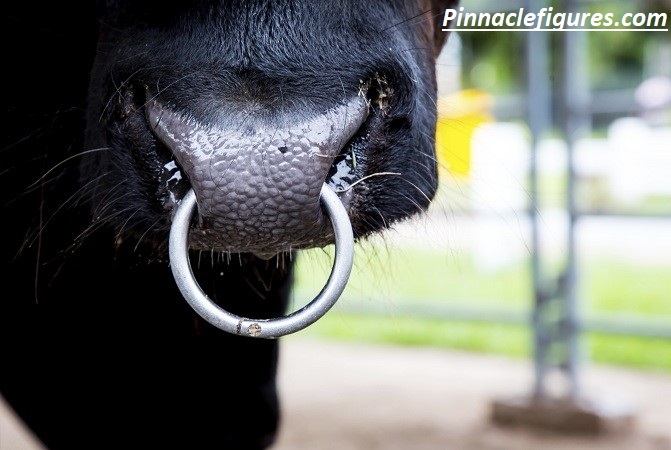
Nose ring / bull ring — A circular metal device inserted through the nasal septum of a bull for restraint and handling purposes. Synonyms: cattle ring, bull nose ring, livestock ring.
Bull staff / bull pole — A rigid pole with a clip attachment used to connect to a bull’s nose ring and guide the animal at a safe distance from the handler. Essential safety equipment.
Head gate — A mechanical device at the front of a squeeze chute that clamps around the animal’s neck to immobilize the head for veterinary and management procedures.
Squeeze chute — A hydraulic or manually operated metal enclosure that holds a cow or bull securely on all sides for safe handling. The gold standard for veterinary work.
Stockmanship — The art and science of handling livestock safely, humanely, and effectively. Low-stress stockmanship refers to techniques that minimize animal fear and stress.
Flight zone — The area of personal space around a livestock animal within which the presence of a human causes the animal to move away. Understanding and working within/outside this zone is central to low-stress handling.
Bud Williams method — A system of low-stress livestock handling developed by Canadian stockman Bud Williams, widely used in North American, Australian, and British beef operations.
Analgesia / local anesthetic — Pain relief medication (e.g., lignocaine/lidocaine) administered to reduce pain during procedures such as nose ring insertion. Recommended as best practice by AVMA and RSPCA.
AVMA — American Veterinary Medical Association. Sets professional standards and guidelines for veterinary practice in the United States, including livestock management procedures.
RSPCA — Royal Society for the Prevention of Cruelty to Animals. UK and Australian organization setting welfare standards and advocating for humane animal treatment.
Model Code of Practice (Australia) — Government-endorsed guidelines for the handling and husbandry of various livestock species in Australia, including cattle.
Animal Welfare Act 2006 (UK) — Primary legislation in England and Wales governing the treatment of animals, including farmed livestock.
Zebu (Bos indicus) — A group of domestic cattle originating in South Asia, characterized by a prominent hump, long ears, and high heat tolerance. Includes Brahman, Nelore, and Gir breeds.
Generally more reactive than European cattle (Bos taurus), making nose ring use particularly important.
Artificial insemination (AI) — The process of manually depositing semen into a cow’s reproductive tract to achieve fertilization without natural mating. Widely used in dairy operations, eliminating the need for on-farm bulls.
People Also Ask — Full FAQ Section
Why do bulls have nose rings but cows don’t?
Bulls have nose rings because intact male cattle are significantly more aggressive and difficult to control than cows or steers. Cows are generally manageable with standard halters or low-stress techniques. Bulls — driven by testosterone — require a more reliable, high-leverage control point. The nasal septum provides this without requiring multiple handlers or excessive physical force. Some cows used in shows or specific handling contexts may also have nose rings, but it is far less common.
Does a nose ring hurt the bull?
The insertion procedure causes acute, short-term discomfort — similar to ear tagging or tattooing in cattle. This can be minimized with local anesthetic, which veterinarians and welfare organizations recommend. Once the piercing heals (typically 2–4 weeks), a correctly fitted nose ring does not cause chronic pain. The ring only creates pressure/discomfort when tension is applied — which is its intended function as a control device.
At what age do you put a ring in a bull’s nose?
The recommended age is between 6 and 12 months. At this age, the nasal septum is still relatively thin and easy to pierce cleanly, the bull is large enough to be safely restrained in a chute, and the animal will have time to heal and adjust before reaching full adult aggression levels. Some farmers ring as early as 4–5 months in hot climates or where bulls must be managed earlier, though this is less common.
Can you lead a bull by its nose ring?
Yes — this is the ring’s primary purpose. Using a bull staff (a rigid pole that clips to the ring) is the safest method, as it keeps the handler at a safe distance from the animal’s head and forequarters. A lead rope can also be attached directly to the ring. Never wrap a lead rope around your hand when leading a bull — if the animal pulls suddenly, the force can cause serious injury to the handler.
What is a bull nose ring made of?
Bull nose rings are most commonly made from stainless steel, brass, or copper. Stainless steel is the most durable and corrosion-resistant, making it the preferred material for long-term use. Brass offers a traditional finish and good strength. Copper is softer and sometimes used for younger animals or first-time ringing. Aluminum rings also exist but are less durable and best suited for temporary use.
Are there bulls without nose rings?
Yes. Not every bull is ringed. Steers (castrated males) generally do not need rings. Some exceptionally calm, well-trained bulls managed in low-interaction environments may be handled without rings. Bulls managed exclusively in separate paddocks with minimal human contact may also go un-ringed in some operations. However, the large majority of bulls used for breeding, shows, or any regular handling are ringed for safety.
How long does it take for a bull’s nose ring to heal?
Initial healing takes approximately 2–4 weeks. Full tissue integration around the ring can take up to 6–8 weeks. During this time, the ring should be kept clean, inspected daily, and not subjected to lead rope or staff tension for at least the first 2–3 weeks. Signs of healthy healing include reducing swelling and no discharge. Signs of infection — persistent swelling, heat, purulent discharge — require veterinary attention.
Is it legal to not put a nose ring in a bull?
In most countries, there is no legal requirement to ring a bull. The decision is based on husbandry needs and safety. However, there may be show regulations requiring rings for entry, and many livestock insurance policies or farm safety standards may effectively mandate them. Where a bull poses a known danger and a nose ring is the established safety standard, failing to ring it could have duty of care implications under general farm safety and animal welfare law.
What happens if a bull loses its nose ring?
A bull that loses its nose ring should be safely restrained before any attempt to re-ring it — do not attempt to approach or handle a de-ringed bull in an open area.
The original piercing site may begin to close within days to weeks, depending on how long the ring had been in place.
A veterinarian or experienced stockman should perform the re-ringing. If the hole has partially closed, a new piercing may be required.
This is one reason high-quality, secure-closure rings are worth the investment.
AI Overview Trigger Q&A
Why do bulls have nose rings?
Bulls have nose rings to allow safe handling and control. The ring passes through the nasal septum — a highly sensitive area. When tension is applied via a lead rope or bull staff, the bull naturally moves in the direction of the handler, preventing dangerous incidents.
How does a bull nose ring control the animal?
A bull nose ring works through pressure and the bull’s natural response to it. The nasal septum is rich in nerve endings. Applying gentle tension to the ring causes the bull to follow the direction of that pressure, giving handlers effective control over a much larger animal.
Is it cruel to put a ring in a bull’s nose?
When done correctly with local anesthetic and proper aftercare, a nose ring causes minimal lasting harm. Veterinary organizations including the AVMA and RSPCA accept it as a humane practice. A healed ring does not cause chronic pain and significantly improves handler safety during bull management.
What are bull nose rings made of?
Bull nose rings are typically made from stainless steel, brass, or copper. Stainless steel is the most durable and rust-resistant option for long-term use. Brass is traditional and strong. Copper is softer, often used for younger bulls. Sizes range from 2.5 to 4 inches in diameter.
When should a bull get a nose ring?
The recommended age to ring a bull is between 6 and 12 months. At this age, the nasal septum is thin enough to pierce cleanly, the bull is large enough for safe chute restraint, and early ringing allows full healing before the animal reaches maximum size and aggression.
Conclusion: Key Takeaways and Action Steps
Bull nose rings are one of the oldest, most globally consistent, and most practically effective tools in livestock management.
They are not a symbol of cruelty — when applied correctly, maintained properly, and used with skill, they are a safety-first solution that protects handlers, reduces animal stress during handling, and enables effective one-person management of animals that could otherwise cause serious harm.
Bull nose rings have earned their place in livestock management for good reason — they work.
A small, low-cost ring through the nasal septum gives handlers safe, reliable control over an animal that can weigh over a ton.
When inserted correctly, maintained properly, and used with skill, a nose ring causes no lasting harm and prevents significant danger.
Every major veterinary and animal welfare body globally accepts this practice as humane and necessary.
For any farmer managing an intact bull, a nose ring is not optional — it is responsible husbandry.
